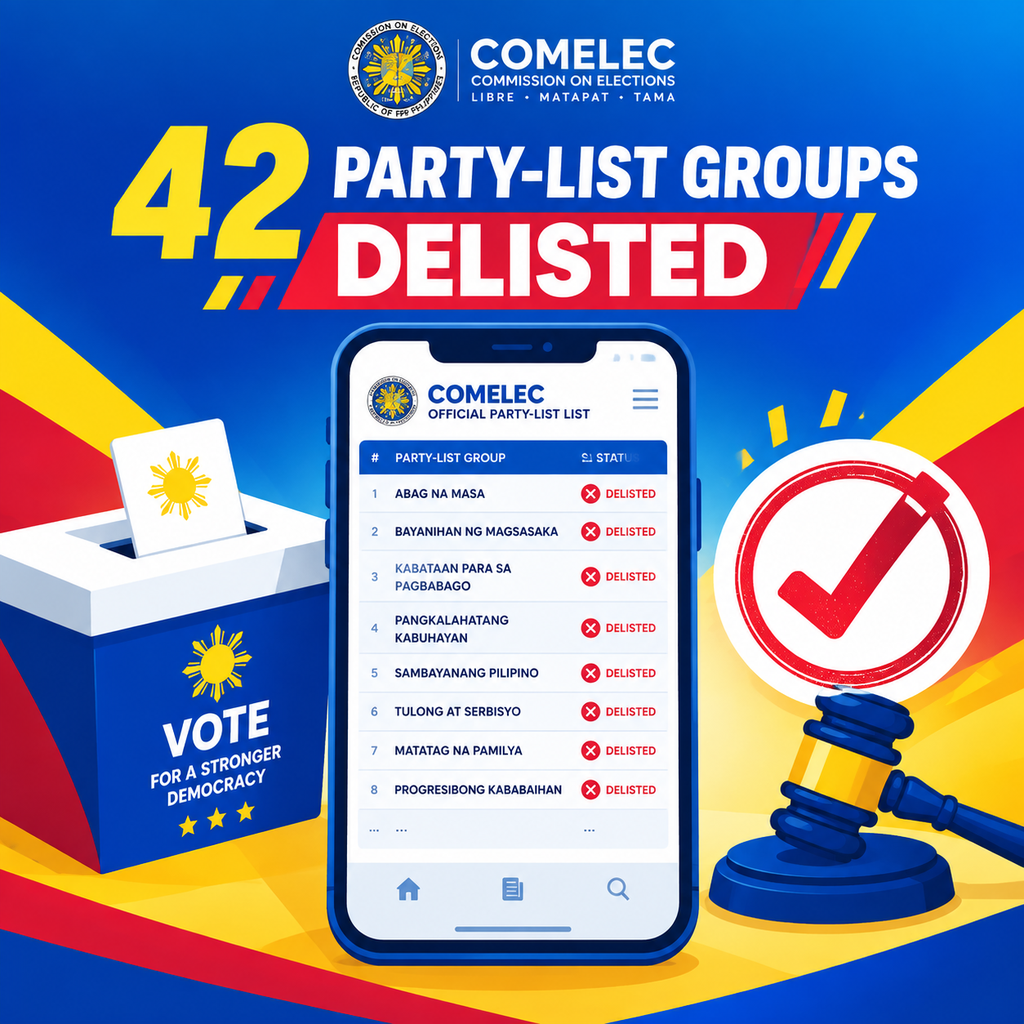
LOOK: 42 delisted and cancelled party-list groups as ordered by the Commission on Elections (Comelec). #Halalan2025 | via Sherrie Ann Torres, ABS-CBN News (📷: Chairman Erwin Garcia)
Comelec's Resolution No. 11071: What It Means for Party-List Groups
The Commission on Elections (Comelec) has taken a decisive step ahead of the May 2025 midterm elections, ordering the delisting and cancellation of 42 party-list groups. This move, detailed in Resolution No. 11071, underscores the poll body's commitment to enforcing the rules governing the party-list system. The resolution, promulgated on October 1, 2024, cites two primary grounds for delisting: failure to participate in the last two preceding elections, and failure to obtain at least 2 percent of the votes cast for the party-list system or secure a seat in the second round of seat allocation. These groups are now ineligible to participate in the upcoming polls, marking a significant shake-up in the political landscape.
The 11 Groups Delisted for Non-Participation
Eleven party-list organizations were removed for failing to participate in the last two preceding elections. Under the Party-List System Act, participation is a fundamental requirement to maintain accreditation. The delisted groups are:
- 1-ABAA (1-Ako Babaeng Astig Aasenso)
- Abyan Ilonggo (AI)
- Akin (Akbay Kalusugan, Inc.)
- Alon (Adhikaing Alay ng Marino sa Sambayanan, Inc.)
- Amana (Aksyon ng Mamamayang Nagkakaisa)
- Ang PDR (Ang Partido Demokratiko Rural)
- Clase (Central Luzon Alliance for Socialized Education)
- KGB (Katipunan ng mga Guardians Brotherhood, Inc.)
- Melchora (Movement of Women for Change and Reform)
- Nactodap (National Confederation of Tricycle Operators and Drivers Association of the Philippines)
- PDDS (Pederalismo ng Dugong Dakilang Samahan)
These groups now face the consequence of their inactivity, and their names will be stricken from the official list of party-list contenders.
The 31 Groups Delisted for Failing the 2% Threshold or Seat Allocation
The remaining 31 party-list groups were delisted for failing to secure at least 2 percent of the votes cast for the party-list system or for failing to obtain a seat in the second round of seat allocation in the last two elections. This criterion ensures that only parties with sufficient voter support remain in the running. The groups are:
- 1-Care (1st Consumers Alliance for Rural Energy, Inc.)
- Abeka (Abe Kapampangan)
- ACTS-OFW (Acts Overseas Filipino Workers Coalition of Organization)
- Ako Bisdak (Ako Bisdak-Bisayang Dako (AB-BD), Inc.)
- Akma-PTM (Aksyon Magsasaka-Partido Tinig ng Masa)
- AP Partylist (formerly 1-APTO) (Alliance of Public Transport Organizations, Inc.)
- Anakpawis
- Ang Kabuhayan
- ALIF (Ang Laban ng Indigent Filipino)
- ANAC-IP (Ang National Coalition of Indigenous Peoples Action Na! Inc.)
- Angkla (Angkla: Ang Partido ng mga Pilipinong Marino, Inc.)
- ABS (Arts Business and Science Professionals)
- Aasenso (Ating Agapay Sentrong Samahan ng mga Obrero, Inc.)
- Abante Pilipinas (Avid Builders of Active Nation's Citizenry Towards Empowered Philippines)
- Butil (Butil Farmers Party)
- Kabalikat (Kabalikat ng Hustisya ng Nagkakaisang Manileño)
- Maypagasa (Kilusang MayPagasa)
- Koop-Kampi (Kooperatiba-Kapisanan ng Magsasaka ng Pilipinas)
- Ayuda Sandugo (formerly Partido Sandugo) (Mindoro Sandugo Para sa Kaunlaran, Inc.)
- Kontra Brownout Partylist (National Association of Electricity Consumers for Reforms, Inc.)
- Marvelous Tayo (Noble Advancement of Marvelous People of the Philippines, Inc.)
- 1 UTAP Bicol (One Unified Transport Alliance for Community Empowerment)
- PTA (Parents Teachers Alliance)
- PLM (Partido Lakas Masa)
- Peace (Philippine Educators Alliance for Community Empowerment)
- PRAI (Philippine National Police Retirees Association, Inc.)
- PPP (Pilipinas Para sa Pinoy)
- Buklod Filipino (Pinagbuklod na Filipino Para sa Bayan)
- 1-Ang Edukasyon (Una ang Edukasyon)
- Wow Pilipinas (Wow Pilipinas Movement)
- Yacap (You Against Corruption and Poverty)
Their removal reflects Comelec's strict enforcement of the rules, ensuring that only parties with demonstrated electoral support continue to operate.
Legal Basis for Delisting Under the Party-List System Act
The delisting is grounded in Section 6 (8) of Republic Act No. 7941, the Party-List System Act, in relation to Section 2 (i), Rule 2 of Comelec Resolution No. 9366. This provision empowers the Commission to cancel the registration of any party-list group that fails to participate in the last two preceding elections or fails to obtain at least 2 percent of the votes cast under the party-list system in the two preceding elections for the constituency in which it is registered. The Comelec may act motu proprio or upon verified complaint, after due notice and hearing. The resolution emphasizes that the two grounds for delisting are separate and cannot be combined. This legal framework ensures that party-list groups remain active and representative, upholding the integrity of the party-list system.
Procedural Steps Taken by Comelec
Before delisting, Comelec followed due process. The Notice of cancellation and delisting was issued by the Office of the Clerk of the Commission on September 26, 2024, and was posted on the Comelec website the same day. This public notification allowed affected groups to be informed. The resolution states that the delisting is without prejudice to the failure to file a Manifestation of Intent to Participate of retained party-list groups, and to the filing of any petitions for cancellation or disqualification against any party, organization, or coalition and/or its nominees for the May 12, 2025 National and Local Elections. This means that even as some groups are removed, others may still face challenges to their accreditation. The process reflects Comelec's commitment to transparency and fairness.
Implications for the 2025 Midterm Elections
The delisting of 42 party-list groups significantly alters the political landscape for the May 2025 midterm elections. With fewer contenders, the remaining party-list groups may see a shift in voter support and seat allocation. The move also serves as a warning to other groups to remain active and meet the required thresholds. For voters, it means a potentially streamlined list of party-list options, though it also raises questions about representation for marginalized sectors that these groups claimed to represent. The Comelec's action underscores the importance of compliance and the dynamic nature of the party-list system. As the elections approach, the focus will shift to the remaining accredited groups and their campaigns to secure seats in the House of Representatives.
Reactions and Next Steps for Delisted Groups
Delisted groups have limited options. According to Comelec guidelines, a registered party that has been delisted may file a new verified petition for registration, but it cannot be eligible for registration in the election immediately following its delisting. This means the 42 groups cannot participate in the 2025 midterms but may attempt a comeback in future elections. Some groups may challenge the delisting through legal means, but the resolution appears firm. The Comelec's decision is final unless overturned by a higher court. For now, these groups must regroup and address the reasons for their delisting if they wish to re-enter the political arena. The coming months will reveal whether any will seek legal remedies or focus on rebuilding for future cycles.
Ensuring a Vibrant Party-List System
The Comelec's decisive action to delist 42 party-list groups is a clear enforcement of electoral rules, aimed at maintaining a vibrant and responsive party-list system. By removing groups that have failed to meet the required participation or vote thresholds, the Commission ensures that only those with genuine voter support and active engagement remain. This not only upholds the integrity of the party-list system but also reinforces the principle that representation must be earned through sustained effort and connection with the electorate. As the 2025 midterms draw near, this purge sets a precedent for accountability, encouraging all party-list groups to remain vigilant and committed to their mandates. Ultimately, it is the voters who will benefit from a more competitive and meaningful selection of party-list options.