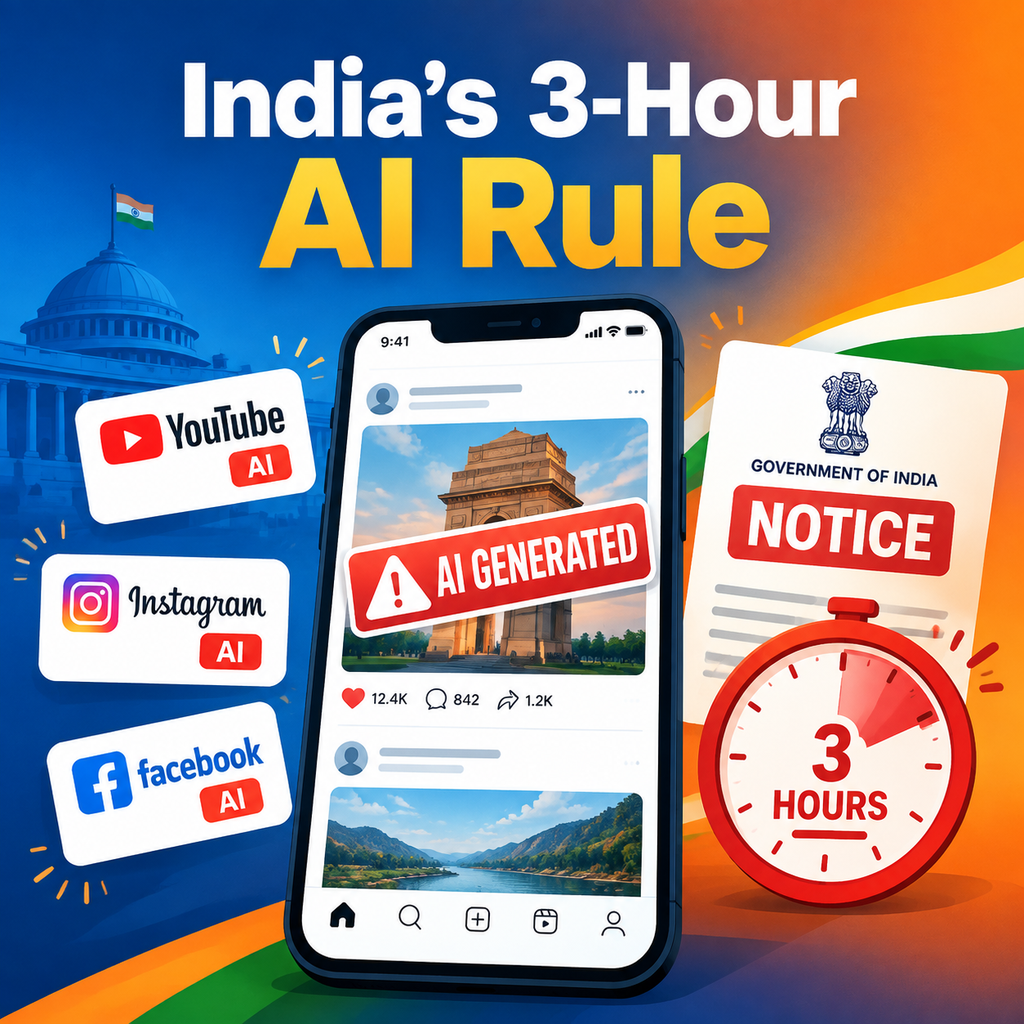
Індія встановлює 3-годинний дедлайн для соціальних платформ щодо видалення AI-генерованого та діпфейк-контенту
Розуміння нового правила Індії щодо видалення за 3 години
Індія різко скоротила терміни для соціальних платформ щодо видалення незаконного AI-генерованого контенту, включаючи діпфейки. Згідно з оновленими Правилами інформаційних технологій (Посередницькі вказівки та Кодекс цифрової медіаетики) 2021 року, платформи тепер повинні діяти за урядовими або судовими наказами протягом трьох годин, замість попереднього вікна у 36 годин. Ця швидка зміна, що набуває чинності з 20 лютого 2026 року, свідчить про жорстку позицію щодо цифрової дезінформації та синтетичних медіа.
Нове правило застосовується до всіх посередників, вимагаючи від них виконувати накази про видалення контенту, визнаного незаконним, з особливим акцентом на AI-генерований матеріал. Для особливо чутливого контенту, такого як інтимні зображення без згоди або оголеність у діпфейках, термін ще коротший — лише дві години, замість попередніх 24 годин. Цей прискорений графік покликаний стримати швидке поширення шкідливого синтетичного контенту.
Обов'язкове маркування AI-генерованого контенту
Окрім видалення, поправки вводять суворі вимоги до маркування синтетично згенерованої інформації (SGI), що охоплює діпфейки та AI-модифіковане аудіо, відео та зображення. Платформи повинні забезпечити, щоб весь такий контент був «помітно позначений», щоб користувачі одразу знали, що він створений AI. Для візуального контенту мітки повинні займати щонайменше 10% площі відображення, а для аудіоконтенту — включати попереджувальне повідомлення протягом перших 10% тривалості.
Постійні метадані та маркери походження
Щоб забезпечити прозорість, платформи повинні вбудовувати постійні метадані або маркери походження в AI-генерований контент, включаючи унікальні ідентифікатори, які пов'язують контент з комп'ютерним ресурсом платформи. Ці маркери не можуть бути змінені, пригнічені або видалені користувачами чи платформами. Це допомагає відстежувати походження та автентичність синтетичних медіа, сприяючи підзвітності.
Декларації користувачів та обов'язки платформ
Для платформ з понад п'ятьма мільйонами користувачів користувачі повинні заявляти, чи є їхні завантаження AI-генерованими. Це покладає відповідальність на творців бути прозорими. Крім того, платформи зобов'язані розгортати автоматизовані інструменти для проактивного запобігання створенню або поширенню SGI, що порушує закон. Цей проактивний підхід має на меті зупинити шкідливий контент у джерелі, а не покладатися лише на запити на видалення.
Вплив на великі соціальні платформи
З кінцевим терміном відповідності 20 лютого 2026 року такі платформи, як Meta (Facebook, Instagram, WhatsApp), Google (YouTube) та X, мали лише десять днів на впровадження цих змін. Цей жорсткий графік змусив їх оновити свої системи маркування, модерації контенту та механізмів швидкого реагування. Недотримання нових правил може поставити під загрозу захист «безпечної гавані», який захищає платформи від відповідальності за користувацький контент.
Скорочені терміни розгляду скарг
Поправки також прискорюють розгляд скарг користувачів. Скарги на контент, що порушує конфіденційність або є чутливим, наприклад інтимні зображення без згоди, повинні бути розглянуті протягом семи днів, замість 15. Інші чутливі скарги тепер потребують вирішення протягом 12 годин замість 24. Це забезпечує швидші дії для постраждалих осіб, особливо у випадках зловживання діпфейками.
Орієнтування в новому регуляторному ландшафті
Для бізнесу та творців контенту ці правила вимагають зміни підходу до використання AI-інструментів. Будь-хто, хто використовує GAN, LLM або подібні технології для створення контенту, повинен забезпечити його належне маркування та водяні знаки. Хоча деякі можуть вважати це тягарем, це крок до побудови довіри та автентичності в Інтернеті, особливо з розвитком AI.
Нова ера цифрової підзвітності
Агресивний графік Індії щодо видалення та маркування відображає глобальну тенденцію до суворішого регулювання AI. Вимагаючи від платформ діяти за години, а не за дні, Індія створює прецедент, який може вплинути на інші країни. Проблема полягає в балансі між швидким правозастосуванням та свободою вираження, але фокус на захисті громадян від шкоди діпфейків є чітким. З набранням чинності цих правил цифрова екосистема в Індії — і, можливо, за її межами — повинна буде адаптуватися, роблячи прозорість та швидкість новими наріжними каменями онлайн-відповідальності.