India ramps up AI rules for social media platforms
Mandatory labelling of synthetically generated information
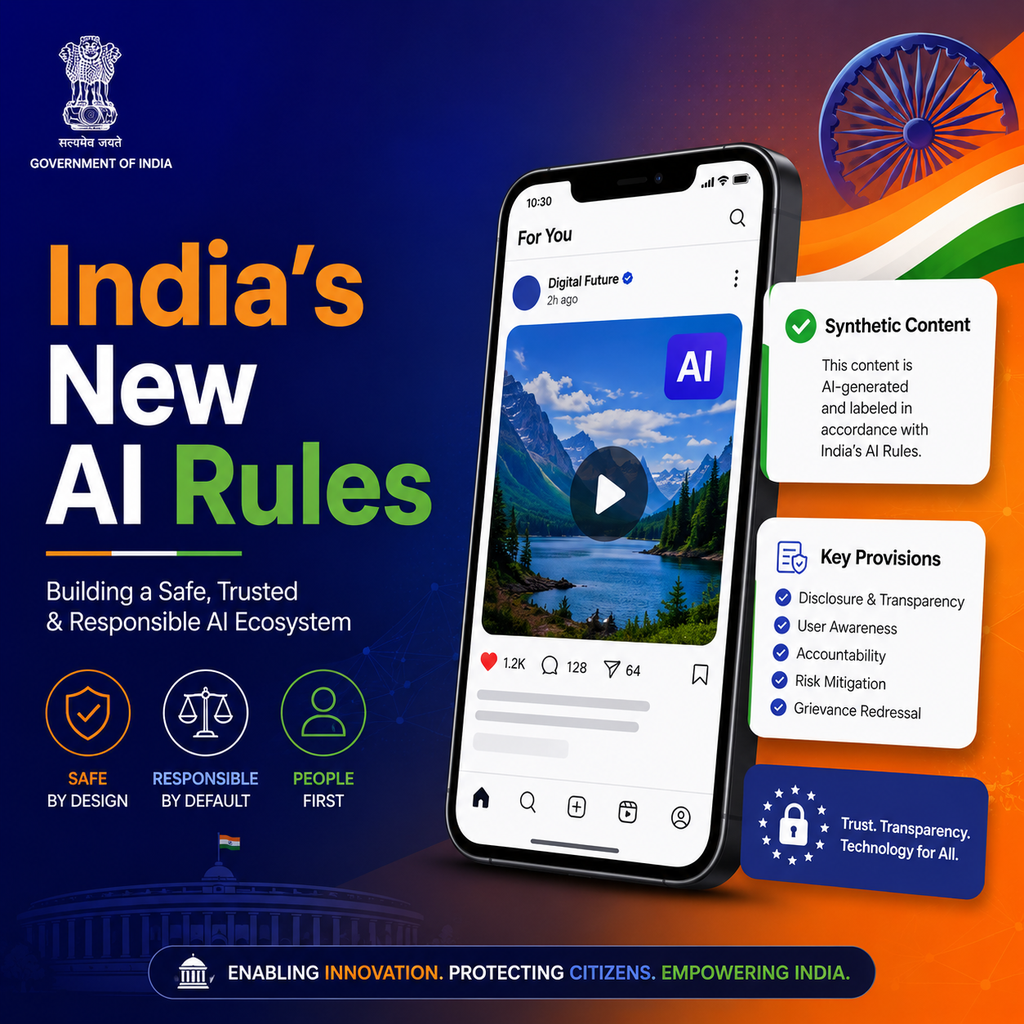
India has officially brought AI-generated content under formal regulation for the first time. The central government's February 10 notification amends the IT intermediary rules, mandating that social media platforms label all synthetically generated information (SGI) in a clear, prominent, and unambiguous manner. This covers deepfake videos, AI-generated voiceovers, face-swapped images—any content artificially created or altered that could be mistaken as authentic. Routine editing such as colour correction, compression, or translation is exempt, as is illustrative content in research papers or presentations.
Platforms must also embed persistent metadata and unique identifiers into SGI, ensuring traceability. Once applied, these markers cannot be removed or tampered with, closing a loophole where labels could vanish when content was re-uploaded. The rules take effect from February 20, 2026.
Three-hour takedown window for unlawful content
Response timelines have been dramatically shortened. For lawful government orders, platforms now have just three hours to act on flagged content—down from 36 hours previously. Other windows have been reduced from 15 days to seven, and from 24 hours to 12. In cases involving nudity or sexually explicit material, the takedown timeline is cut to two hours.
Platforms must deploy automated tools to actively block SGI that violates the law, including child sexual abuse material, obscene content, false electronic records, explosives-related content, and deepfakes intended to deceive. Failure to comply could result in platforms losing safe harbour protection under Section 79 of the IT Act.
Stricter obligations for significant social media intermediaries
Major platforms like Instagram, YouTube, and Facebook face additional responsibilities under the new Rule 4(1A). Before any upload goes live, they must require users to declare whether the content is AI-generated. Platforms must then use automated tools to verify these declarations. If confirmed as synthetic, a visible label must be displayed. Knowingly permitting unlabelled synthetic content is deemed a failure of due diligence.
The earlier draft proposal—requiring visual labels to cover at least 10% of display area—has been dropped after industry feedback. The final rules mandate labels but without rigid size specifications, offering more flexibility while maintaining disclosure requirements.
User declaration and awareness requirements
Social media users will see the most visible change: labels on AI-generated posts, reels, videos, and audio clips. Before engaging, users will know what is real and what is machine-made. Additionally, users uploading content must declare whether it was created or altered using AI tools. Misrepresentation can now attract penalties under the Bharatiya Nyaya Sanhita (BNS) or POCSO Act, depending on content nature.
Platforms must also send periodic reminders—at least once every three months—in English or any Eighth Schedule language, informing users about the rules and consequences of violating them. These reminders will appear in updated terms of service, privacy policies, or in-app notifications.
Accountability extends to AI tool providers
The amended rules hold not just platforms but also AI tool providers accountable. Providers like ChatGPT, Grok, and Gemini must ensure their tools are not used to create synthetically generated information that violates Indian law. Serious violations involving child protection or criminal offenses must be reported to authorities. This comes amid controversies around AI tools enabling the creation of obscene and non-consensual images.
The government has also updated legal references, replacing the Indian Penal Code with the Bharatiya Nyaya Sanhita, 2023, ensuring alignment with the new criminal law framework. Platforms and users alike must adapt quickly—compliance deadline is February 20, 2026.