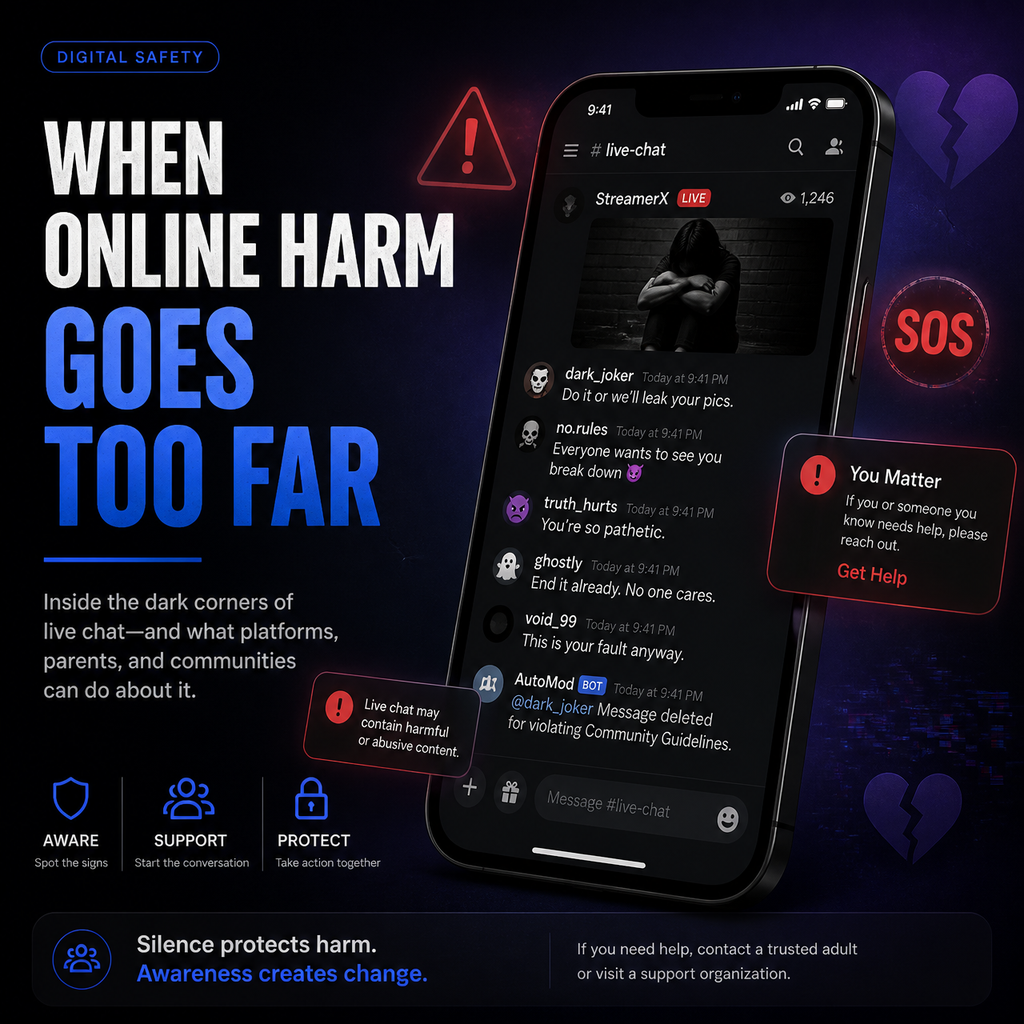
He was suicidal and needed help. A 15-year-old girl pushed him to kill himself on a live stream.
The Tragic Case That Exposed a Dark Online Underworld
In the early hours of January 17, 2022, 13-year-old Jay Taylor quietly slipped out of his Gig Harbor, Washington home, carrying a white extension cord. He walked to a nearby Safeway, propped his phone against a chain-link fence, and livestreamed his own death. The gruesome footage was watched and recorded by members of a sadistic online group called 764, who had spent hours coercing him into taking his own life. What led Jay to that moment is a chilling case study in how vulnerable individuals are targeted and manipulated by online predators.
Jay had been struggling with his mental health, seeking friendship and support online. He posted in a Discord server about crafting and finding new gay or trans friends. Within hours, he was looped into a live chat with several individuals, including a 15-year-old girl who would become his primary tormentor. According to the lawsuit filed by Jay's parents, the group members had a script for pushing him toward suicide and setting up a livestream for maximum shock value.
Who Is the 764 Network?
The 764 Network is an extremist group that operates across platforms like Discord, targeting minors and other vulnerable individuals. The group glorifies violence, employs blackmail, and aims to coerce victims into extreme abuse, including self-harm, sexual abuse, animal mutilation, extortion, and suicide. The name "764" is believed to reference a specific ideological or recruiting tactic, but its core purpose is to cause maximum harm and terror.
Members of 764 often use a combination of psychological manipulation, threats, and peer pressure to break down their targets. They may pose as friends or romantic interests, offering support and understanding, only to turn on their victims and demand increasingly horrific acts. The group also shares explicit content, including videos of self-harm and abuse, to create a sense of complicity and fear.
The Role of the 15-Year-Old Girl
At the center of Jay's case is a 15-year-old girl, identified in court documents as L.S. She communicated with Jay in the hours before his death, allegedly following instructions from the 764 group leader, Javan, an adult who has since been charged with multiple crimes. L.S. had been given a script on how to push someone toward suicide and how to set up a suicide livestream. She kept pressing Jay to die with her in a suicide pact, telling him that using a cord would not hurt.
Jay, who was reportedly suicidal and vulnerable, agreed to the pact because he did not want L.S. to die alone. He told her he would hang himself with an extension cord. The two set up a video call titled "live laugh rip jay LMAO" and invited 764 members, including Javan, to watch. Javan then took over the call, asked Jay if he had a rope, and, allegedly sexually aroused, told him to take off his clothes because "it's hotter." Jay refused, but went through with the suicide anyway.
How Discord Failed to Act
Jay's parents have filed a lawsuit against Discord, alleging that the platform knowingly enabled the 764 group to target and coerce minors. They claim that Discord had received multiple warnings about the group's activities but failed to take meaningful action. The complaint describes children being forced to send sexual images, hurt animals, carve words into their skin, mutilate themselves, and attempt or complete suicide, often on livestream so others can watch, record, and use the footage for blackmail.
In the wake of Jay's death, an online post was published on Discord that read: "Someone killed themselves on camera because of me. Let me know if you want the video." This chilling message was allegedly shared by a member of 764, highlighting how the group uses such content as a form of recruitment and intimidation. Despite this, Discord allegedly continued to allow the group to operate, failing to implement adequate safeguards or respond to reports.
The Aftermath and Legal Battle
Following Jay's death, law enforcement launched an investigation that uncovered the extent of the 764 group's activities. A key witness, likely L.S., provided information that led to the identification of Javan and others involved. The video of Jay's suicide was copied and shared on Discord, and it was eventually used as marketing for the group, demonstrating the horrific nature of their operations.
Jay's parents have filed a civil lawsuit against Discord, seeking accountability for the platform's alleged negligence. They argue that Discord's failure to act contributed directly to their son's death. The case raises important questions about the responsibility of online platforms to protect their users, especially minors, from dangerous and illegal content.
Protecting Vulnerable Users Online
The tragic case of Jay Taylor underscores the urgent need for stronger online safety measures. Social media platforms must invest in robust moderation, proactive detection of harmful groups and behaviors, and clear reporting mechanisms. They should also partner with mental health organizations to provide resources and intervention for users showing signs of crisis.
Parents and guardians can play a crucial role by maintaining open communication with their children about online activities, monitoring their digital interactions, and educating them about the risks of chatting with strangers. It's also essential to recognize warning signs of grooming and coercion, such as secretive behavior, sudden changes in mood, or unusual gifts.
For those struggling with suicidal thoughts or feelings, help is available. The National Suicide and Crisis Lifeline can be reached by dialing or texting 988, and the Trevor Project offers support for LGBTQ+ youth. No one should have to face these challenges alone.
The case of Jay Taylor is a stark reminder of the dangers that lurk online and the devastating consequences when platforms fail to act. As society grapples with these dark corners of the internet, we must demand accountability and implement safeguards to prevent future tragedies.