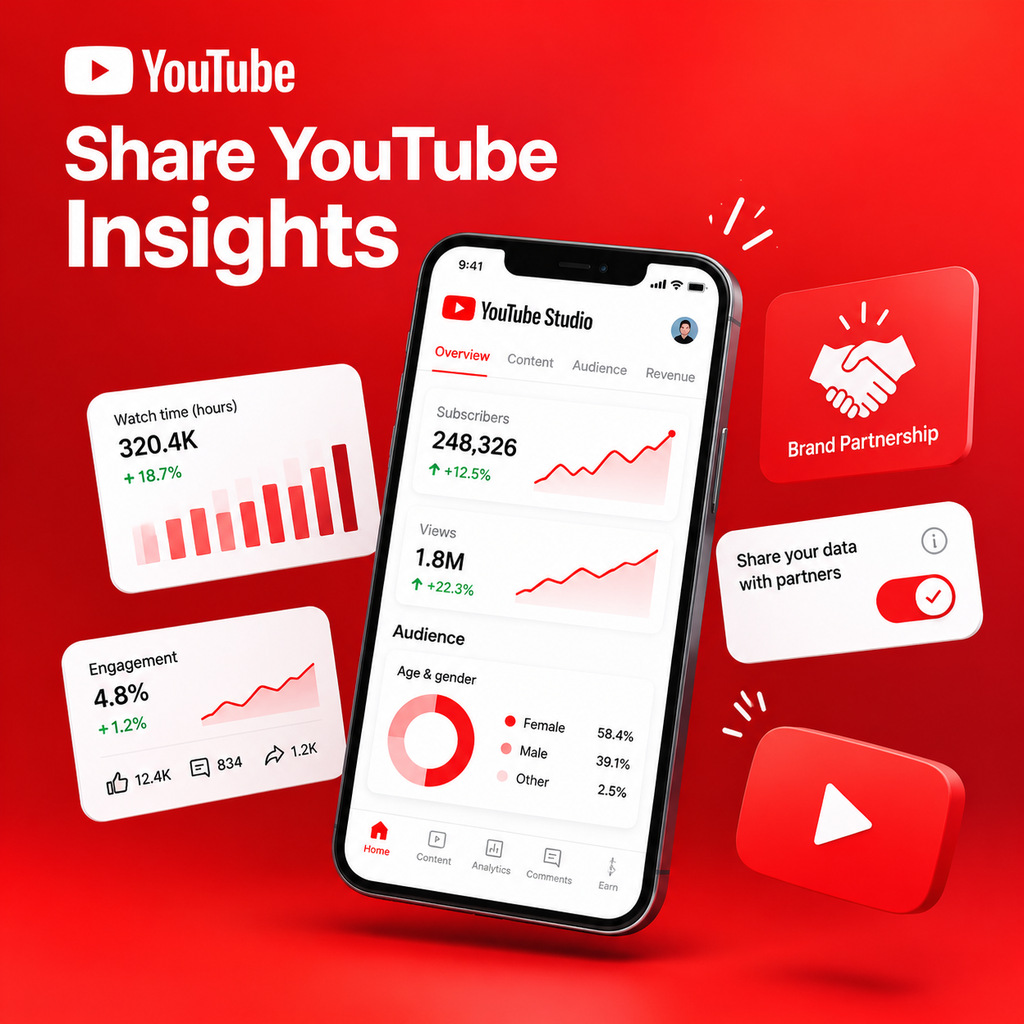
YouTube Lets Channels Share More Performance Data With Brands
Why YouTube's New Data Sharing Option Matters for Creators
YouTube has quietly rolled out a powerful new setting that could reshape how creators land brand deals. The platform now allows eligible YouTube Partner Program (YPP) creators to share aggregated channel insights directly with advertisers, brands, and third-party platforms. This isn't just another analytics tweak—it's a strategic move to grease the wheels of the creator economy by making it easier for brands to discover and evaluate potential partners. For creators tired of vague sponsorship inquiries, this could be the transparency upgrade they've been waiting for.
But what exactly gets shared, who can see it, and how do you stay in control? Let's break down the details so you can decide if this feature deserves a spot in your monetization strategy.
What Data Gets Shared (and What Stays Private)
When you enable channel insights sharing, YouTube shares a curated set of aggregated metrics—not your raw, video-level analytics. Think of it as a highlight reel for your channel's performance. The data falls into three main categories:
- Channel statistics: Views, watch time, likes, comments, shares, and even unique viewers (reach). Brands also see your subscriber count, channel creation date, and topic categories.
- Audience breakdown: Demographics like age ranges, gender, and geographies, plus content type preferences (Shorts vs. Live). Media Kit data such as in-market interest, affinity interest, household income, and parental status is also included.
- Shopping performance: If you're in the YouTube Shopping affiliate program, brands can see sales, gross merchandise value (GMV), and engagement metrics for your tagged videos.
What's not shared? Individual viewer information, real-time data, and any metrics outside these categories. Your private analytics dashboard remains private—this setting only exposes aggregated insights that brands need to assess fit.
Who Can See Your Data—and Where
YouTube doesn't hand your data to just anyone. Insights are shared across Google-approved tools, including YouTube Creator Partnerships, Google Ads Insights Finder, and Google Merchant Center. These are the platforms advertisers and brands already use to plan campaigns and find creators. By integrating your data into these tools, YouTube aims to surface your channel to brands actively looking for partners in your niche.
Importantly, this isn't a free-for-all. Only third-party advertisers, brands, and platforms that YouTube has vetted can access the data. And remember: even if you opt out, brands can still see your public stats (subscriber count, views, etc.). The difference is that opting in gives them a richer, more nuanced picture of your audience and performance—the kind of detail that can tip the scales in your favor during a partnership negotiation.
How to Turn On Channel Insights Sharing
Enabling the feature takes just a few clicks in YouTube Studio on desktop. Here's the step-by-step:
- Sign in to YouTube Studio.
- Click Settings in the bottom-left menu.
- Select Channel → Advanced settings.
- Under "Channel insights sharing," check the box for Allow advertisers, brands, and third-party platforms to view channel insights for earning opportunities.
- Click Save.
That's it. The setting is off by default, so you're never sharing data without explicit consent. And you can turn it off at any time by unchecking the box—though note that if you've previously signed YouTube's Creator Partnerships Terms of Service or completed third-party authentication in YouTube Analytics, some data may continue to be shared under those separate agreements.
The Strategic Upside: More Eyes on Your Channel
Why would you opt in? The short answer: visibility. "The creator economy is growing, and more advertisers and brands are eager to partner with YouTube creators," YouTube explained in its announcement. "But at times, it can be hard for advertisers to tell if a creator is the right match, because important channel information is not available to them." By sharing your aggregated insights, you're essentially handing brands a pre-packaged media kit that answers their burning questions: Who watches your content? How engaged are they? Do they shop? This streamlined data exchange can lead to more ad revenue, brand deals, and shopping affiliate opportunities—without the back-and-forth of manually sending screenshots and stats.
Privacy Controls and What You Need to Know
YouTube has built in guardrails to keep creators in the driver's seat. The setting is opt-in, and you can revoke access whenever you like. However, there are a few nuances to keep in mind. First, if you've signed the YouTube Creator Partnerships Terms of Service or completed a third-party authentication in YouTube Analytics, your insights may still be shared under those terms even if you turn off channel insights sharing. Second, turning off the setting doesn't make you invisible—brands can still find you through public data like your channel name, subscriber count, and views. The key difference is that they'll lack the deeper demographic and shopping performance data that could make you a more compelling partner.
What This Means for the Future of Brand Deals
This update signals a broader shift toward data-driven creator matchmaking. As brands become more sophisticated in their influencer strategies, they'll demand more than just subscriber counts—they'll want proof of engagement, audience alignment, and conversion potential. By giving creators a simple way to share those insights, YouTube is essentially building a bridge between the creative and commercial sides of the platform. For creators, the message is clear: transparency pays. The more brands know about your channel's performance, the easier it is for them to say yes to a partnership. In a crowded creator landscape, that extra layer of credibility could be your competitive edge.