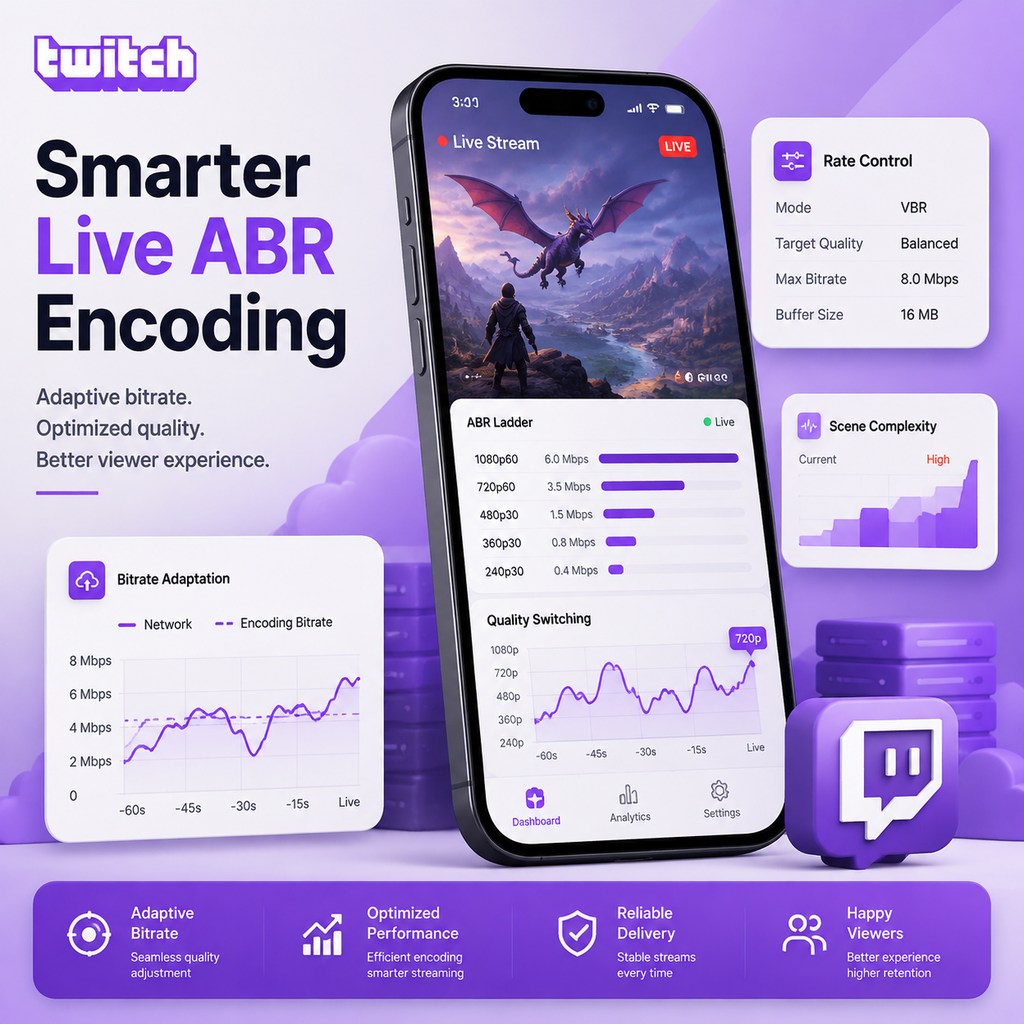
Сегментне керування бітрейтом відеокодера для живого ABR-стрімінгу
Чому сегментне керування бітрейтом важливе для живого ABR
Адаптивний бітрейт (ABR) став основою надійної доставки живого відео через публічний інтернет. Оскільки глядачі мають різні швидкості з'єднання та пристрої, можливість перемикатися між різними якісними версіями в реальному часі вже не розкіш, а необхідність. Традиційні методи керування бітрейтом, однак, були розроблені для іншої епохи, що часто призводить до неефективності при застосуванні до живих ABR-процесів. Саме тут на допомогу приходить сегментне керування бітрейтом, пропонуючи розумніший і більш адаптивний підхід.
У цій статті ми розглянемо, чому сегментне керування бітрейтом є критично важливим для живого ABR-стрімінгу, чим воно відрізняється від звичайних методів CBR і VBR, а також як його впровадити для досягнення кращої якості та ефективності.
Розуміння основ ABR-стрімінгу
ABR-стрімінг працює шляхом кодування одного й того ж відеоконтенту в кількох комбінаціях бітрейту та роздільної здатності, відомих як версії. На стороні приймача відеоплеєр постійно відстежує доступну пропускну здатність глядача та вибирає найбільш відповідну версію для завантаження та відтворення. Мета подвійна: максимізувати якість відео, завантажуючи найвищий можливий бітрейт, одночасно запобігаючи перериванням відтворення, гарантуючи, що бітрейт залишається нижчим за швидкість з'єднання глядача.
Для безперебійної роботи цієї системи кожна версія ділиться на сегменти однакової тривалості, зазвичай від 2 до 6 секунд. Плеєр може запитувати ці сегменти незалежно, що дозволяє плавно перемикати якість при зміні умов мережі. Ефективність цього процесу залежить від здатності кодера створювати сегменти з постійним розміром, що відповідає цільовому бітрейту.
Обмеження звичайних CBR і VBR
Традиційно кодування з постійним бітрейтом (CBR) було основним методом для живого стрімінгу. CBR забезпечує передбачувану вихідну швидкість передачі даних, що дозволяє плеєрам легко оцінювати розміри сегментів. Однак CBR часто жертвує якістю, особливо під час складних сцен, які потребують більше даних для збереження візуальної чіткості. Кодер змушений підтримувати постійний бітрейт, навіть коли контент вимагає більшого, що призводить до візуальних артефактів.
Обмежений VBR як компроміс
Щоб пом'якшити цю проблему, деякі стрімінгові платформи використовують обмежений VBR, де бітрейт може змінюватися, але обмежений певним відсотком вище цільового — часто 10%. Цей підхід забезпечує певну гнучкість, але все ще обмежує кодер, не дозволяючи йому ефективно розподіляти біти між різними рівнями складності сцен. Результат — золота середина, яка не повністю використовує переваги кодування зі змінним бітрейтом.
Перехід до сегментного керування бітрейтом
Сегментне керування бітрейтом є зміною парадигми. Замість того, щоб підтримувати постійний бітрейт протягом усього потоку, цей метод дозволяє кодеру вільно змінювати бітрейт у межах кожного сегмента, гарантуючи, що загальний розмір кожного сегмента залишається постійним і дорівнює середньому цільовому бітрейту. Це форма повного VBR, яка враховує ABR, тобто кодер оптимізує якість без обмеження постійного вихідного бітрейту.
На практиці це дозволяє кодеру використовувати вищі бітрейти для складних сцен і нижчі для простих, зберігаючи при цьому розміри сегментів, які очікують ABR-плеєри. Це призводить до значного покращення якості, особливо для контенту з високою динамікою або деталізованим зображенням.
Як це працює на практиці
Ключ до сегментного керування бітрейтом — виявлення меж сцен або використання фіксованої тривалості сегмента. Під час кодування сегмента кодер розподіляє біти на основі складності кадрів у цьому сегменті. Наприклад, сегмент із швидкою динамічною сценою може використовувати вищий бітрейт, тоді як сегмент зі статичним фоном — нижчий. Кодер регулює параметри керування бітрейтом на льоту, щоб досягти цільового розміру сегмента.
Для живого стрімінгу це вимагає від кодера бути перспективним і прогнозуючим, використовуючи буфери та методи попереднього перегляду для планування розподілу бітів. Це складніше, ніж простий CBR, але винагорода — більш ефективний процес кодування, який зберігає якість без ризику буферизації для глядача.
Впровадження сегментного керування бітрейтом у живих кодерах
Для розробників та інженерів, які працюють над відеокодерами, впровадження сегментного керування бітрейтом передбачає кілька міркувань. По-перше, кодер повинен бути здатним створювати сегменти точно однакового розміру для кожної версії, що може вимагати буферизації та попереднього перегляду. По-друге, алгоритм керування бітрейтом має бути достатньо надійним, щоб справлятися з різною складністю контенту, дотримуючись обмежень розміру сегментів.
Ключові технічні аспекти, які слід враховувати
- Керування буфером: Кодери повинні ретельно керувати буферами, щоб уникнути переповнення або спорожнення, зберігаючи постійні розміри сегментів.
- Попередній перегляд: Впровадження попереднього перегляду допомагає кодеру передбачати майбутню складність і ефективніше розподіляти біти.
- Виявлення зміни сцен: Ідентифікація змін сцен у межах сегментів дозволяє точніше розподіляти бітрейт.
Такі платформи, як Twitch, висловили зацікавленість у цьому підході, заохочуючи дослідження та розробку алгоритмів керування бітрейтом, які працюють у повному режимі VBR, генеруючи фіксовані розміри сегментів. Це відкриває двері для інноваційних рішень, які можуть розширити межі якості живого відео.
Реальний вплив і майбутні напрямки
Впровадження сегментного керування бітрейтом може суттєво вплинути на досвід живого стрімінгу. Глядачі отримують вищу якість відео при тому ж бітрейті, що особливо помітно на великих екранах і для контенту з високою динамікою. Творці контенту можуть транслювати більш захоплюючі потоки без необхідності збільшувати пропускну здатність завантаження.
Для стрімінгових платформ цей підхід може призвести до більш ефективного використання пропускної здатності, потенційно знижуючи витрати та підвищуючи задоволеність глядачів. Оскільки ABR-стрімінг продовжує розвиватися, ми можемо очікувати більш складних алгоритмів керування бітрейтом, які використовують машинне навчання та ШІ для подальшої оптимізації розподілу бітів у реальному часі.
Майбутнє живого стрімінгу — за інтелектуальними адаптивними техніками кодування. Сегментне керування бітрейтом є значним кроком у цьому напрямку, пропонуючи виграш як для якості, так і для ефективності. Незалежно від того, чи ви розробник платформи, виробник інструментів або просто допитливий стрімер, розуміння та впровадження цих досягнень підготує вас до наступного покоління доставки живого відео.