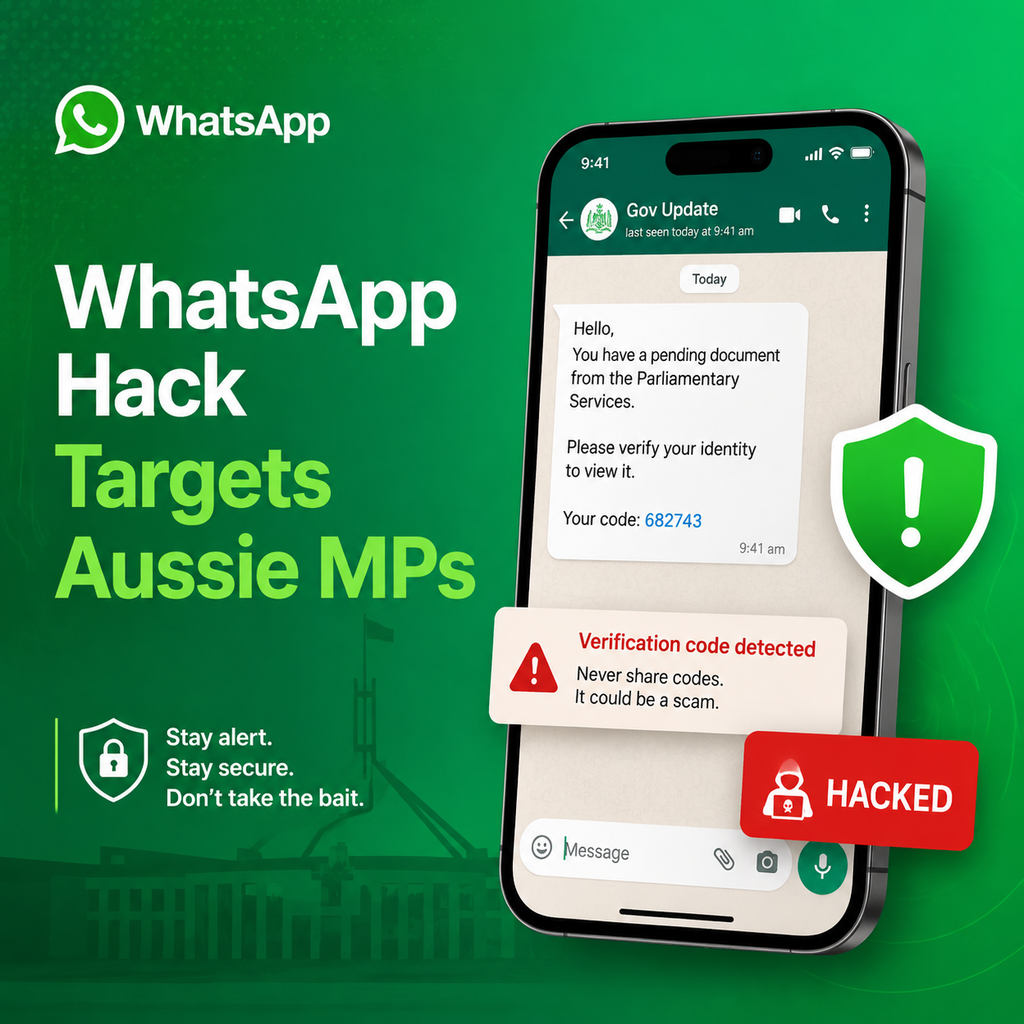
Deputato australiano e collaboratori hackerati in un attacco WhatsApp da parte di un 'attore straniero'
Come si è svolto l'hacking di WhatsApp
In un attacco di phishing mirato il 6 marzo 2026, un parlamentare federale australiano e tre collaboratori hanno subito il compromesso dei loro account WhatsApp personali. Gli aggressori hanno utilizzato un metodo semplice ma efficace: prima hanno attivato codici di verifica legittimi sui dispositivi delle vittime, poi hanno contattato le vittime spacciandosi per contatti fidati chiedendo quei codici. Una volta ottenuti, gli hacker hanno collegato gli account ai propri dispositivi, ottenendo di fatto il pieno controllo delle comunicazioni. La violazione è stata confermata durante un'audizione del Senate Estimates il 25 maggio, dove i funzionari del Department of Parliamentary Services (DPS) hanno dettagliato la progressione dell'incidente.
Il Chief Information Officer del DPS, Mike Webb, ha spiegato che il modello dell'attacco indicava uno sforzo coordinato da parte di un attore statale straniero. Gli account compromessi erano personali ma sono stati anche accessibili su dispositivi gestiti dal DPS, sollevando allarmi sulle vulnerabilità cross-platform. L'obiettivo degli aggressori era il takeover degli account, che hanno raggiunto con successo in tutti e quattro i casi. Il DPS ha immediatamente informato l'Australian Signals Directorate (ASD) e ha temporaneamente bloccato l'accesso web di WhatsApp sulla rete parlamentare dal 9 al 16 marzo per contenere la potenziale diffusione.
Tattiche di phishing e ingegneria sociale
L'attacco si è basato fortemente sull'ingegneria sociale piuttosto che su exploit tecnici sofisticati. Il phishing rimane una delle minacce informatiche più efficaci perché colpisce la psicologia umana. Gli hacker si sono mascherati da contatti fidati—potenzialmente anche altri parlamentari i cui account erano già stati compromessi—per richiedere il codice di verifica. Questo approccio basato sulla fiducia ha reso le vittime più propense a collaborare. Una volta che l'aggressore ha inserito il codice, WhatsApp ha automaticamente collegato il suo dispositivo, dandogli pieno accesso a messaggi, media e rubriche.
Avvertimenti simili da agenzie globali
Questo metodo rispecchia le tattiche segnalate dalle agenzie di cybersecurity in tutto il mondo. Nel 2025, il National Cyber Security Centre del Regno Unito e la Cybersecurity and Infrastructure Security Agency degli Stati Uniti hanno emesso avvisi che dettagliavano tecniche di phishing identiche rivolte agli utenti di WhatsApp. L'attacco australiano suggerisce che questi attori delle minacce sono diventati più aggressivi, prendendo di mira specificamente figure politiche di alto profilo. Il funzionario del DPS ha notato che gli aggressori sembravano avere una conoscenza preliminare delle reti delle vittime, rendendo i messaggi di phishing molto convincenti.
Risposta e misure di mitigazione
Dopo aver scoperto la violazione, il DPS ha agito rapidamente per isolare la minaccia. Hanno bloccato i browser web di WhatsApp sulla rete parlamentare—una mossa che ha interrotto il flusso di lavoro ma ha prevenuto ulteriori compromissioni degli account. Gli individui colpiti hanno ricevuto supporto immediato e l'ASD ha condotto un'indagine forense. Dopo l'incidente, il DPS ha esortato tutti i parlamentari e il personale a rivedere le proprie impostazioni di sicurezza, attivare l'autenticazione a due fattori e prestare attenzione quando condividono codici di verifica o informazioni sensibili tramite app di messaggistica.
Panorama più ampio delle minacce informatiche
Questo incidente fa parte di un modello più ampio di attacchi informatici mirati a enti governativi australiani. Tra luglio 2025 e marzo 2026, il DPS ha rilevato 46 incidenti di malware, quasi 20.000 tentativi di phishing e 1.458 allerte informatiche. Il volume sottolinea la minaccia persistente che affrontano gli uffici politici. I funzionari hanno sottolineato che, sebbene app di messaggistica come WhatsApp offrano comodità, non sono state progettate per comunicazioni altamente sensibili. La violazione rafforza la necessità di protocolli di cybersecurity robusti e formazione continua del personale.
Lezioni per gli uffici politici
L'incidente di hacking evidenzia vulnerabilità critiche nell'uso di dispositivi personali in ambienti sicuri. Le figure politiche e il loro personale devono adottare una mentalità incentrata sulla sicurezza, trattando ogni richiesta inaspettata di codici di verifica con sospetto. Implementare metodi di autenticazione resistenti al phishing, come le chiavi di sicurezza hardware, può aggiungere un ulteriore livello di protezione. Esercitazioni regolari di cybersecurity possono aiutare il personale a riconoscere e segnalare tentativi di phishing prima che abbiano successo. Con l'evoluzione delle minacce, l'adattamento continuo e la vigilanza rimangono la migliore difesa, assicurando che anche i canali di comunicazione più fidati non diventino porte d'accesso per avversari stranieri.