Instagram’s New Reels Feature Is Pretty Obviously Facebook’s Attempt to Take Down TikTok
The short-form video arms race just got hotter
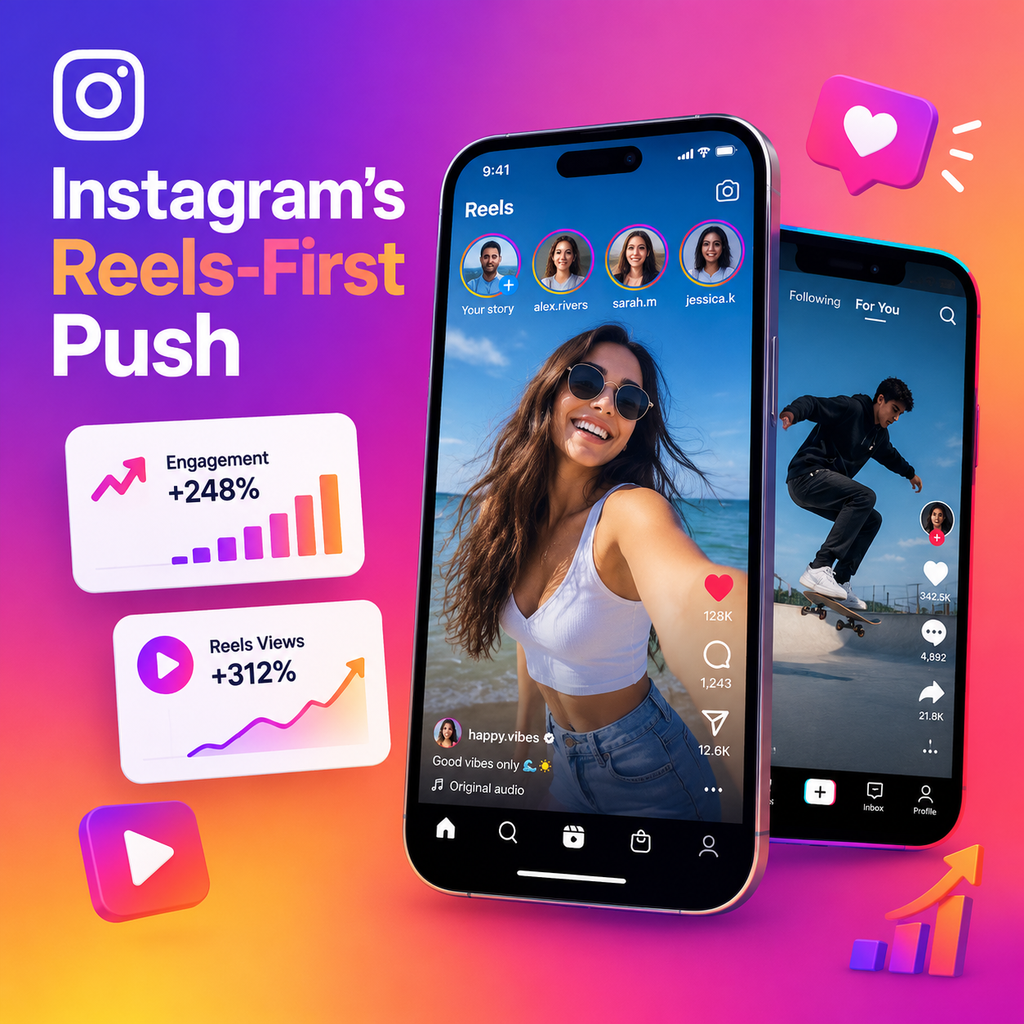
Instagram’s latest Reels update isn’t subtle. The platform is testing a feature that lets users open the app directly into a full-screen, TikTok-style feed of short videos, bypassing the traditional home feed entirely. It’s the clearest signal yet that Meta is done pretending Reels is just another format—it’s the main event. And with TikTok facing regulatory heat, the timing couldn’t be more strategic.
What exactly is the new Reels feature?
According to screenshots shared by app researcher Radu Oncescu, Instagram is testing an optional interface that launches straight into a Reels feed. Stories sit at the top, and a sideways swipe takes you back to the classic timeline. The feature was first spotted in India last year and is now being quietly rolled out in other markets.
This isn’t just a cosmetic tweak. It’s a fundamental shift in how Instagram wants you to experience the app: video-first, scroll-second, and always on. For a platform that built its empire on square photos, that’s a seismic change—and a direct shot at TikTok’s core user behavior.
Meta’s not-so-secret playbook
Meta has a long history of mimicking rival features until they become indistinguishable. Stories came from Snapchat. Reels came from TikTok. Now, by making Reels the default entry point, Instagram is betting that users won’t bother switching apps for their short-video fix.
The strategy seems to be working. In 2025, Reels accounted for a staggering 46% of time spent on Instagram in the US, up from just 20% in 2022. And more than half of all ads on Instagram are now Reels ads, generating over $50 billion in annual revenue. That’s not just a feature—it’s a money-printing machine.
TikTok’s troubles are Instagram’s opportunity
TikTok is facing a wave of regulatory scrutiny, from data privacy concerns to potential bans in several countries. That uncertainty has created a window for Meta to woo creators and advertisers who might be looking for a Plan B.
The numbers tell the story: 26% of Reels users no longer engage with TikTok at all, up from 20% a year earlier. And in markets like the US and Brazil, Reels now ranks as the top video service by monthly usage, while TikTok trails behind. Instagram isn’t just competing—it’s capitalizing on TikTok’s vulnerabilities.
The engagement battle: Reels vs. TikTok by the numbers
When it comes to raw reach, TikTok still has the edge. Videos on TikTok average 32,895 views, compared to 23,074 for Reels—a 42.6% difference. But Instagram leads on shares at every account size, and Reels often generate more comments, especially for medium and large accounts.
Engagement rates are nearly neck-and-neck: 3.67% for TikTok and 3.54% for Instagram. But the type of engagement matters. TikTok is a discovery engine—72.7% of views come from the For You page. Instagram is more of a conversation hub, where shares and saves signal deeper connection. For brands, that can translate into higher-quality interactions.
How brands and creators should adapt
If you’re a creator, the message is clear: don’t put all your eggs in one basket. TikTok remains the fastest way to grow an audience—nearly twice as many TikTok accounts moved up a size tier this year compared to Instagram. But Instagram is where community and conversion happen.
For brands, the play is to tailor content per platform. TikTok rewards native, trend-driven videos that feel spontaneous. Instagram Reels, especially with the new feed experiment, favors polished, shareable content that sparks conversation. Cross-posting the same video might save time, but it won’t maximize impact.
The bigger picture: a battle for attention
At its core, this isn’t about features—it’s about attention. Meta sees short-form video as the future of social media, and it’s willing to reshape Instagram entirely to win that future. TikTok, meanwhile, is fighting to maintain its momentum amid regulatory headwinds.
For users, the upside is more choice and better tools. For creators and brands, it’s a reminder that platform loyalty is fleeting—and adaptability is the only real strategy. As Instagram rolls out its Reels-first interface, one thing is certain: the short-video wars are far from over, and the next move is anyone’s guess.