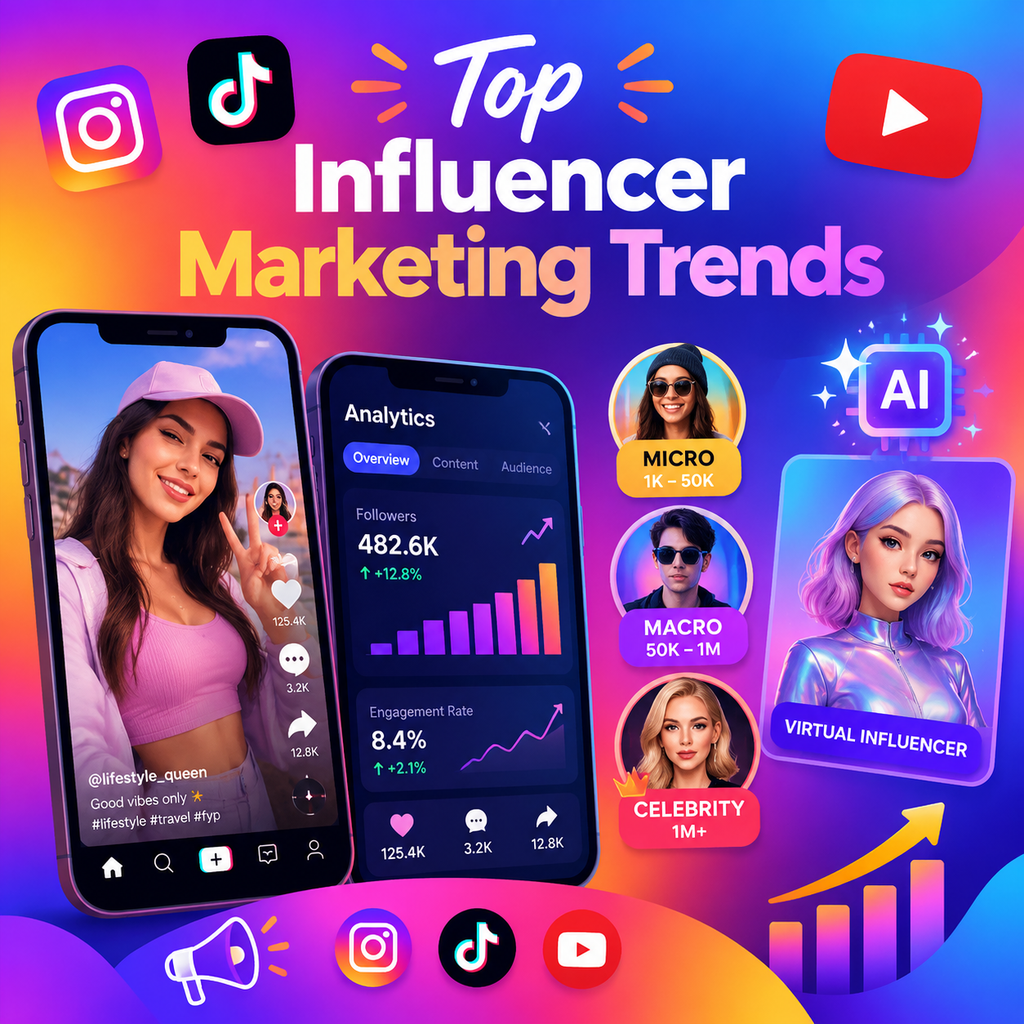
Top trends for influencer marketing
The Influencer Economy Gets Bigger, Smarter, and More Measurable
Influencer marketing has grown from a niche tactic to a cornerstone of digital strategy. According to recent industry reports, global influencer market size reached $16.4 billion in 2022—over four times TikTok's advertising revenue. And budgets keep climbing: 75.5% of marketers either increased or maintained their influencer budgets in 2023, with 18% spending seven figures or more. More importantly, influencer content is no longer confined to organic posts. A staggering 97% of brands now repurpose influencer content across paid social, websites, email, and even connected TV. As the space matures, the trends shaping it are becoming more nuanced—and more powerful.
Short-Form Video Dominates the Feed
If there's one content format that has defined the past few years, it's short-form video. TikTok's rise has been meteoric: its share of influencer marketing spending jumped from 2.3% in 2019 to 18.5% in 2023, overtaking both Facebook and YouTube along the way. But TikTok isn't the only game in town—Instagram Reels and YouTube Shorts have also seen explosive growth. In Q1 2023 alone, Reels usage by brands and celebrities increased by 241% year-over-year. The sweet spot for engagement? Videos between 31 and 60 seconds. Marketers are allocating more budget to this format because it delivers on both reach and engagement, making it a non-negotiable part of any influencer strategy.
Why Video Works
Short-form video taps into the scroll-stopping nature of social feeds. It's snackable, shareable, and—when done right—feels native to each platform. The key is authenticity: audiences can spot a scripted ad from a mile away. Brands that empower influencers to create raw, unpolished content are seeing the best results.
Micro-Influencers Still Matter, but Macro-Influencers Are Back
For years, micro-influencers (5K–100K followers) were the darlings of influencer marketing. Their niche appeal and higher engagement rates made them a favorite for brands seeking authenticity. In 2021, 90% of marketers planned to work with micro-influencers. But by 2023, that number dropped to 74%, while macro-influencers (100K–500K followers) grew from 72% to 81% of respondents. Celebrities also saw an uptick, from 14% to 29.5%. Why the shift? As influencer marketing becomes more integrated into broader campaigns, brands need reach and scale. The sweet spot often lies in a mix: micro-influencers for niche credibility, macro-influencers for awareness, and celebrities for mass appeal.
Balancing Reach and Authenticity
The takeaway isn't that micro-influencers are obsolete—far from it. Rather, brands are getting smarter about tiering their influencer strategy. A well-rounded campaign might use micro-influencers to drive engagement and trust, while macro-influencers amplify the message to a wider audience.
Influencer Content Goes Everywhere
Gone are the days when influencer content lived solely on the creator's feed. Today, 97% of marketers repurpose influencer content across other channels—paid social (85%), owned social (72%), websites (42%), email (25%), and even display and CTV. This trend reflects a broader shift: influencer content is being treated as a creative asset, not just a one-off post. In fact, 58% of brands now work with creators to produce content exclusively for paid and owned channels. This approach, known as creator-generated content (CGC), allows brands to maintain a consistent voice while leveraging the authenticity that influencers bring.
The Rise of CGC
CGC is quickly becoming its own category within influencer marketing. Unlike traditional influencer posts, CGC is created specifically for brand channels, giving marketers full control over messaging and usage rights. It's a win-win: creators get paid for their work without needing to post on their own feeds, and brands get high-quality, authentic content that resonates with audiences.
Measurement and ROI Take Center Stage
As influencer budgets grow, so does the pressure to prove results. Determining ROI remains the top challenge for 60% of enterprise marketers, followed by selecting the right influencers (56%) and content quality (52%). To address this, brands are leaning on a mix of metrics: engagement rate is the most popular KPI (69%), followed by reach (53%) and share of voice (43%). Conversions, traffic, and sales are also key, each cited by roughly 30–35% of marketers. The push for better measurement is driving investment in analytics tools and more sophisticated attribution models.
Paid Amplification: The New Normal
One way brands are maximizing ROI is by putting media dollars behind influencer content. In 2023, 65% of respondents spent at least half of their influencer budgets on media amplification. This hybrid approach—pairing organic influencer posts with paid promotion—ensures content reaches beyond the creator's existing audience, driving both awareness and conversions.
AI and Virtual Influencers Enter the Chat
Artificial intelligence is making its mark on influencer marketing, particularly in influencer identification. 72% of marketers see AI as a top opportunity for finding the right creators, followed by deeper performance analysis (65%) and streamlined workflows (55%). But AI's influence extends beyond backend tools. Virtual influencers—AI-generated characters with their own social media personas—are gaining traction. While still a niche trend, virtual influencers offer brands a way to experiment with novel content formats and avoid the risks associated with human influencers. As the technology improves, expect to see more brands testing the waters.
The Human Element Remains
Despite the rise of AI, authenticity and human connection remain at the heart of influencer marketing. Virtual influencers may capture attention, but they can't replicate the genuine trust that human creators build with their audiences. The smartest brands will use AI to enhance—not replace—human creativity.
Platform Shifts: Instagram Leads, TikTok Surges, Threads Looms
Platform preferences are shifting. Instagram still reigns supreme, with 49% of marketers ranking it as the top platform for influencer marketing. TikTok is a close second, with 38.5% ranking it number one. YouTube remains a strong third. But the biggest wildcard is Threads: 75% of respondents plan to test influencer activations on the platform within the next 12 months. As social media fragmentation continues, brands must stay agile, allocating budget to platforms that deliver the best results for their specific audience.
The Takeaway for Marketers
The throughline across all these trends is evolution. Influencer marketing is no longer a one-off tactic—it's an integrated, measurable, and increasingly sophisticated channel. Brands that embrace short-form video, tiered influencer strategies, content repurposing, and advanced measurement will be best positioned to thrive. The future belongs to those who can balance creativity with accountability, and authenticity with scale.