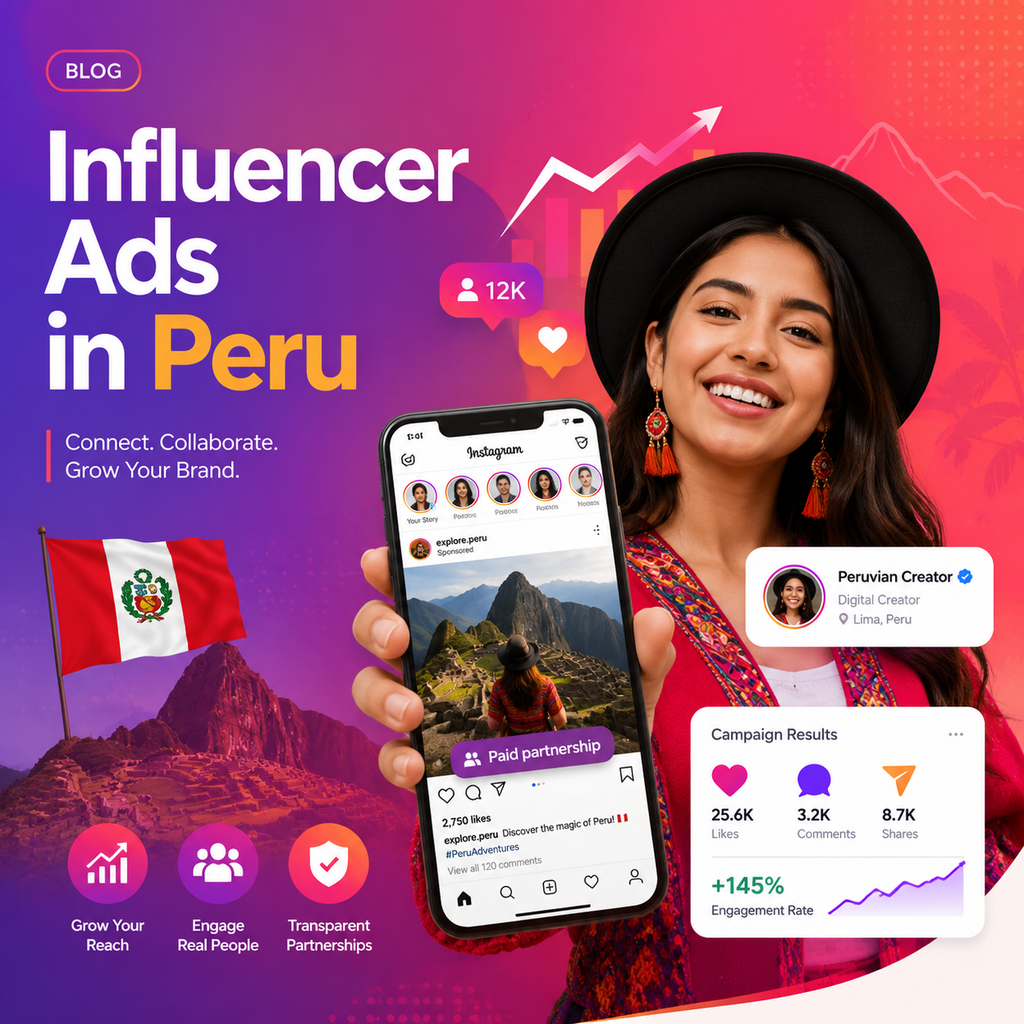
Influencer Advertising - Peru
Peru's Influencer Advertising Market: A Digital Powerhouse in the Making
Peru's influencer advertising landscape is undergoing a seismic shift. With social media penetration reaching 81.6% of the population—28.3 million active identities—brands are pouring unprecedented resources into creator partnerships. In 2025 alone, influencer investment hit US$6.5 million, a staggering 62% jump from the previous year. This isn't just a trend; it's a fundamental reconfiguration of how Peruvian brands connect with consumers. As traditional advertising loses its grip, the authentic voices of influencers are stepping into the spotlight, reshaping campaign strategies from Lima to Arequipa.
The Surge of Social Media and Digital Spending
Peru's digital ecosystem is booming. Social media ads now command 45% of all digital investment in the country, according to IAB Perú and PwC. This shift mirrors broader regional trends but carries a distinctly Peruvian flavor. The expanding middle class and steady economic growth have fueled demand for digital content, creating fertile ground for influencers to thrive. Internet penetration continues to climb, with mobile accessibility making social platforms ubiquitous. Flavio Gálvez, a content creator specializing in marketing and finance, notes that brands no longer see influencers as mere amplification channels. Instead, they're strategic interlocutors who bridge companies and niche audiences. This evolution is pushing agencies and brands to rethink budgets, moving away from scattergun approaches toward precision targeting through trusted creators.
Mobile-First Consumption Drives Engagement
With smartphones in nearly every pocket, Peruvians consume content on the go. Influencers who master short-form video and live streams are reaping the rewards, while brands that adapt their messaging to mobile-first formats see higher engagement rates.
Shifting Preferences: Authenticity Over Reach
The days of choosing influencers solely by follower count are fading. Peruvian consumers crave authenticity, and brands are responding by partnering with micro and nano influencers who resonate deeply with niche communities. These creators may have smaller audiences, but their credibility and engagement rates often outperform mega-influencers. According to industry insiders, the true value lies in a creator's ability to connect through consistency, closeness, and relevance built over time. Gálvez emphasizes that a specialized profile—whether in finance, education, technology, health, or sustainability—can explain complex topics and spark meaningful conversations. That's far more valuable than a massive, disengaged following. This shift demands that brands evaluate not just audience size but the quality of the community and the trust the influencer commands.
The Rise of Specialized Creators
Niche expertise is becoming a currency. Influencers who can simplify technical subjects or offer genuine lifestyle insights are in high demand, allowing brands to align with content that feels organic and authoritative.
Regulatory Landscape: Transparency Takes Center Stage
Peru's regulatory environment is evolving to keep pace with influencer advertising. The National Institute for the Defense of Competition and the Protection of Intellectual Property (INDECOPI) has taken proactive steps, publishing the Guía de Publicidad Para Influencers in 2024. This framework clarifies disclosure requirements, emphasizing that sponsored content must be clearly identified to protect consumers. Under Legislative Decree 1044, the Law on Suppression of Unfair Competition, misleading or covert advertising can lead to sanctions for both advertisers and influencers. Recent cases underscore this: an influencer was fined for promoting online betting without disclosure, and another received a warning for advertising an illegal motorcycle taxi service. These actions signal that Peru is serious about transparency, creating a more trustworthy environment for influencer marketing to flourish.
Best Practices for Compliance
Brands and influencers must prioritize clear disclosures—using hashtags like #Ad or #Sponsored—and ensure that any material connection is evident. Regular training and updated guidelines from INDECOPI help maintain a level playing field and protect consumer trust.
The Agency Ecosystem: Fueling Professionalization
As budgets grow, so does the infrastructure supporting influencer campaigns. A network of specialized agencies has emerged across Peru, offering services ranging from influencer identification to campaign management and performance measurement. Firms like Sherlock Communications, with a strong focus on influencer marketing, have helped brands achieve significant reach—one campaign connected with over 1.2 million users. These agencies bring rigor to the process, ensuring that campaigns are not only creative but also measurable and compliant. They bridge the gap between brands and creators, handling negotiations, contracts, and reporting. This professionalization is crucial as the market matures, allowing brands to scale their efforts while mitigating risks associated with rogue influencers or unclear deliverables.
Measuring What Matters
Agencies are increasingly leveraging analytics to track reach, engagement, clicks, and conversions. By setting clear KPIs from the outset, they help brands demonstrate ROI and refine future strategies.
Challenges and Opportunities Ahead
Despite rapid growth, challenges remain. The rise of AI-generated influencers presents new dilemmas around transparency and authenticity. Consumers may not realize they're interacting with a virtual persona, raising accountability concerns. Additionally, the line between genuine content and paid promotion can blur, making disclosure even more critical. On the flip side, opportunities abound. As Peru's economy strengthens and digital literacy improves, influencers will play an even greater role in shaping purchase decisions. Brands that invest in long-term relationships with credible creators—and that integrate them early in campaign planning—will reap the benefits of deeper engagement and loyalty. The key is to move beyond seeing influencers as a tactical add-on and instead treat them as strategic partners.
Navigating AI and Virtual Influencers
While AI influencers can offer novelty and cost-efficiency, they must be clearly labeled to avoid misleading audiences. Regulatory frameworks will need to adapt, but for now, human authenticity remains a powerful differentiator.
The Future of Influencer Advertising in Peru
Peru's influencer advertising market is poised for continued expansion. Forecasts point to steady growth, driven by increasing internet penetration, a vibrant creator community, and a regulatory environment that fosters trust. The average ad spending per internet user is rising, reflecting the channel's effectiveness. As brands become more sophisticated in their approach—prioritizing credibility, measurement, and compliance—the market will likely see further professionalization. Agencies will play a pivotal role, offering strategic guidance and executional excellence. Ultimately, the future belongs to those who understand that influence is not about shouting the loudest but about building genuine connections. In Peru, that lesson is being learned fast, and the brands that embrace it are already seeing the dividends.