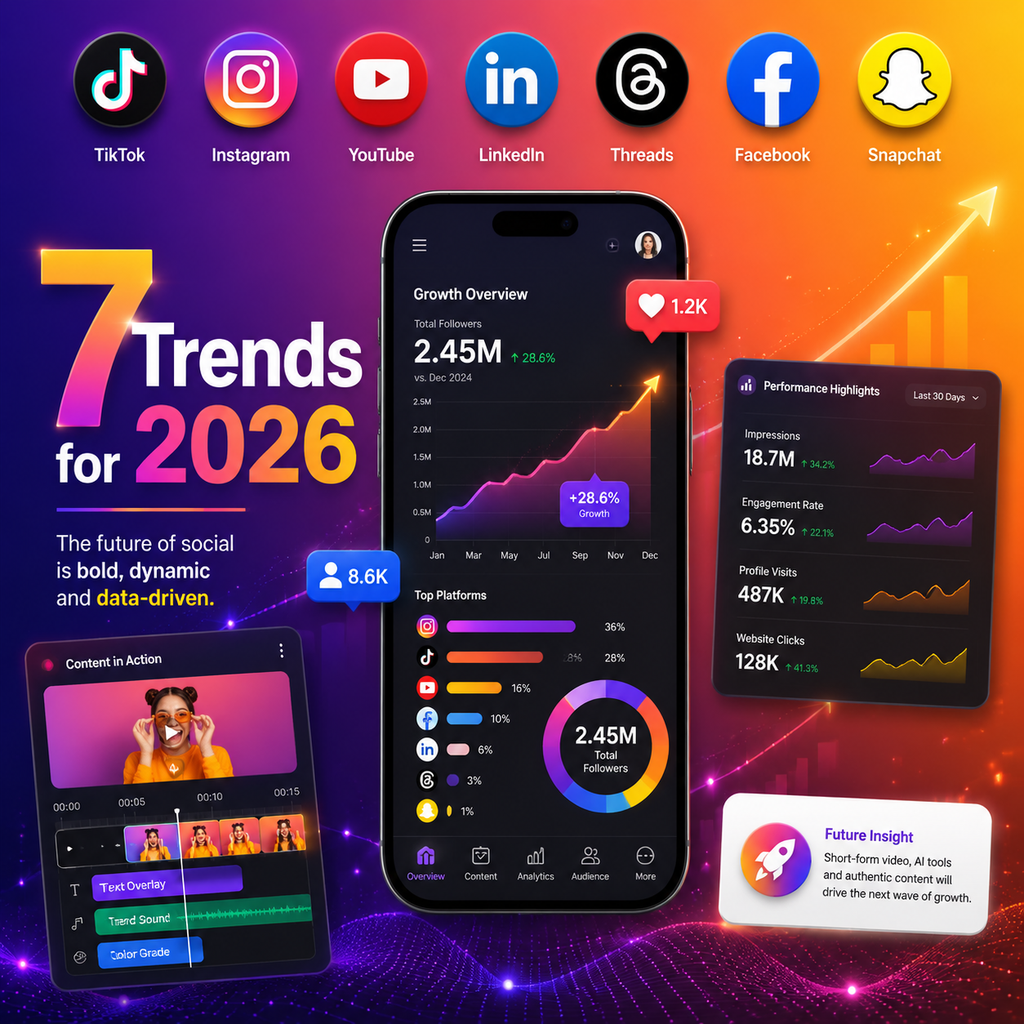
7 social media trends you need to know in 2026
AI-Generated Content Goes Mainstream
In 2026, AI is no longer a futuristic novelty—it's a core part of the social media toolkit. From writing captions to generating endless video hook ideas, AI tools are making content creation faster and cheaper than ever. Platforms are integrating AI directly, allowing marketers to automate entire workflows. But this shift also brings a challenge: the rise of "AI slop"—low-quality, generic content that floods feeds and erodes trust. Brands that rely too heavily on AI without a human touch may see engagement drop, while those who use AI as a co-creator (not a replacement) will stand out.
Video Remains King—But the Format Is Evolving
Short-form video still dominates, but long-form content is making a serious comeback. Instagram Reels now allow up to 20 minutes, and YouTube Shorts can be three minutes. Audiences are craving depth alongside quick hits. Serialized content—regular mini-series or recurring segments—is becoming a powerful way to build loyal viewership. Brands that post less frequently but with more purpose and narrative will win attention. The key is to tailor video length and style to each platform's unique audience behavior, rather than cross-posting the same clip everywhere.
Authenticity and Human-Led Storytelling Win
In a sea of AI-generated content, real human connection is more valuable than ever. The "authenticity renaissance" is driving engagement toward creators who feel genuine, raw, and unfiltered. Cozy, FaceTime-style videos and nostalgic vibes resonate deeply. Brands need to prioritize storytelling over trend-chasing—share behind-the-scenes moments, use real employees, and highlight customer stories. The most successful social media accounts in 2026 will feel less like polished billboards and more like trusted friends.
Social Search Is Overtaking Google
A massive shift is happening: people are skipping Google and going straight to TikTok, Instagram, and YouTube to search for products, restaurants, travel tips, and how-to advice. This means optimizing your content for search within these platforms is critical. Use descriptive captions, relevant keywords, and clear audio that answers common questions. Social platforms are becoming the new search engines—and brands that treat their content as searchable resources will enjoy long-term discoverability.
The Rise of User-Controlled Feeds
Algorithms are no longer the sole gatekeepers. Users now have more control over what they see—they can tune out entire content categories, reset recommendations, and even choose a "mood" or "vibe" for their feed. This shift means brands must earn their place in the feed by creating content that users actively want to see, not just content that the algorithm pushes. Quality and relevance matter far more than volume. Expect a "quality reset" where platforms reward meaningful, story-driven content over sheer posting frequency.
On-Platform Conversions Replace Website Traffic
The era of "link in bio" is fading. In 2026, social commerce is projected to hit $100 billion in the US alone, with platforms like TikTok Shop, Instagram Shopping, and YouTube Shopping enabling seamless purchases without ever leaving the app. Rather than driving traffic to a website, brands are closing sales directly on social media. This trend is especially powerful for creators using affiliate marketing, digital products, and brand collaborations. The social platform itself becomes the storefront.
Micro-Influencers and Expert Personal Brands Take Over
The most valuable creators in 2026 are nano-influencers (5,000–50,000 followers) who have deep expertise in a specific niche. They command higher engagement and trust than mega-influencers or virtual influencers, which are fading as audiences crave genuine human connection. Brands are shifting from chasing follower counts to partnering with real authorities. The smartest play is to pick a super-specific niche, become the go-to expert, and build co-branded products or long-term partnerships. This is the year of the specialist, not the generalist.