BBB Business Tip: How to use social media analytics to find opportunities for growth
Turn Vanity Metrics into Revenue Drivers
Likes and follows feel good, but they don't pay the bills. The real power of social media analytics lies in translating raw engagement data into actionable business intelligence. With the social media analytics market projected to grow at a staggering 22-25% CAGR through 2032, it's clear that data-driven decision-making is no longer optional—it's the engine of modern growth. For small businesses, this means moving beyond surface-level metrics and diving into the stories your data tells about customer behavior, preferences, and pain points.
By analyzing patterns in comments, shares, and saves, you can uncover what truly resonates with your audience. Maybe a specific product demo video consistently drives traffic to your site, or perhaps a customer service complaint reveals a bottleneck in your fulfillment process. These insights are goldmines for growth. The key is to set up a measurement framework that aligns with your business goals—whether that's increasing online sales, generating leads, or improving customer retention. Once you have that foundation, you can start spotting opportunities that others miss.
Mine Sentiment Analysis for Product Innovation
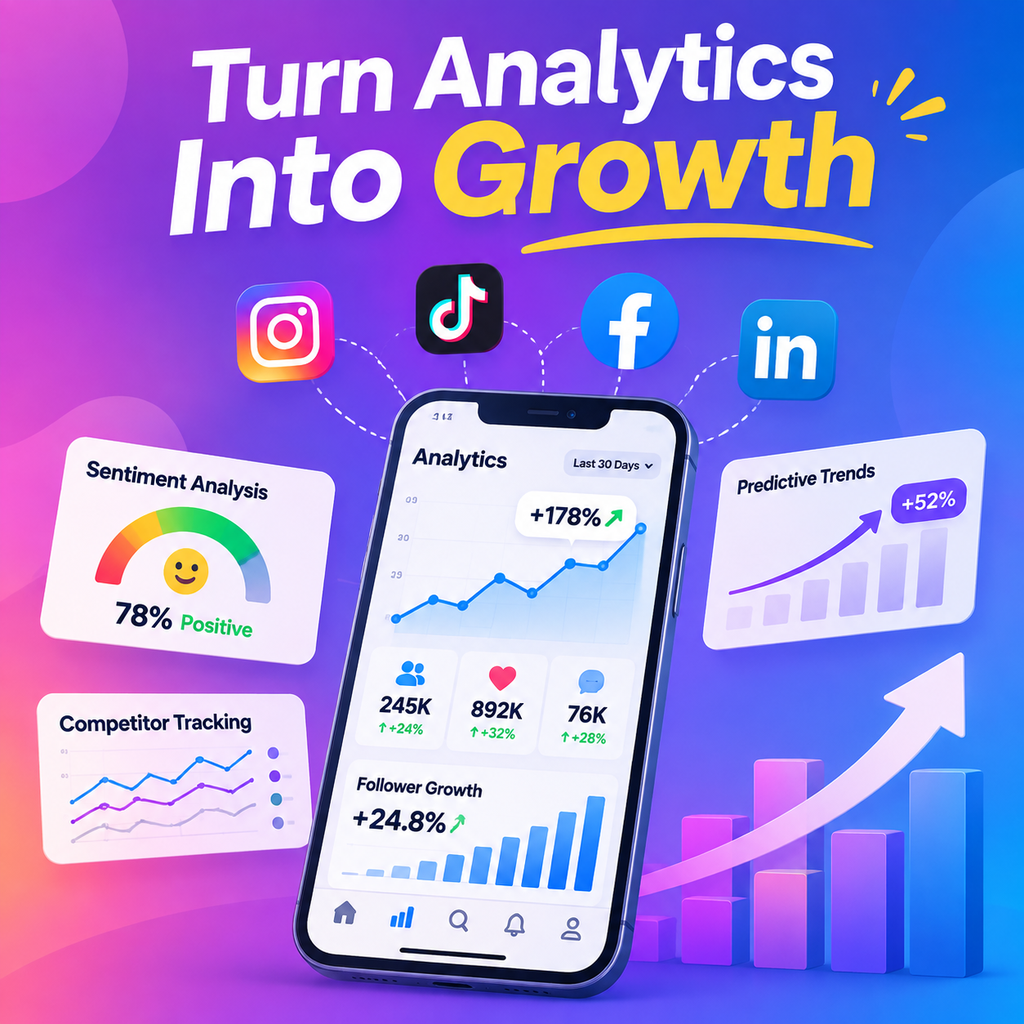
Your customers are talking about you—are you listening? Sentiment analysis tools scan social conversations to gauge how people feel about your brand, products, and competitors. This isn't just about managing reputation; it's a direct line to product development ideas. When you notice a recurring frustration with a specific feature, or excitement about a use case you hadn't considered, you've found a growth opportunity.
For example, a restaurant might discover through social listening that customers love a particular dish but wish it came in a vegetarian option. That feedback can lead to a new menu item that drives sales and satisfies an unmet need. Similarly, a retailer might see that shoppers are constantly asking about sizing details for a popular item, signaling a need for better product descriptions or a virtual sizing tool. By systematically analyzing sentiment, you turn casual comments into a roadmap for innovation and improvement.
Track Competitors to Spot White Space
Competitive intelligence through social media analytics is like having a crystal ball for your industry. By monitoring your competitors' social channels, you can see what campaigns are working, which products are generating buzz, and where customers are expressing dissatisfaction. This isn't about copying—it's about identifying gaps and opportunities to differentiate.
Pay attention to the questions customers ask competitors and the complaints they post. If a competitor is consistently slow to respond to inquiries, you can capitalize by highlighting your responsive customer service. If they're launching a product that receives mixed reviews, you can refine your own offering to address those concerns. Tools that track share of voice and engagement rates can help you benchmark your performance and spot emerging trends before they become mainstream. The goal is to be proactive, not reactive, in your strategic planning.
Optimize Influencer Partnerships with Data
Influencer marketing can be a powerful growth channel, but only if you choose the right partners. Social media analytics allows you to look beyond follower counts and assess true engagement quality. By analyzing metrics like audience demographics, comment sentiment, and conversion rates, you can identify influencers whose audiences align with your target market and who drive actual results.
Use analytics to track the performance of past collaborations. Which influencers generated the most clicks, sales, or sign-ups? What type of content resonated best—video reviews, tutorials, or giveaways? These insights help you allocate your budget more effectively and negotiate better terms. Additionally, real-time analytics can alert you to potential issues, such as a sudden drop in engagement or negative sentiment, allowing you to address problems quickly. With the rise of short-form video and platforms like TikTok, having a data-backed influencer strategy is essential for cutting through the noise.
Integrate Analytics with CRM for a 360-Degree View
Social media data doesn't exist in a vacuum. To truly unlock growth opportunities, integrate your social analytics with your customer relationship management (CRM) system. This gives you a complete picture of each customer's journey—from their first interaction on social media to their purchase history and beyond. You can see which social touchpoints lead to conversions, identify your most valuable customer segments, and personalize your outreach with unprecedented precision.
For instance, if you notice that customers who engage with your Instagram stories are more likely to make repeat purchases, you can prioritize that channel in your retention campaigns. Or, if a particular LinkedIn post drives a surge in qualified leads, you can double down on that content style. Integration also enables automated workflows, such as triggering a special offer when a customer mentions your brand positively. The result is a more cohesive, efficient marketing engine that turns social insights into revenue.
Use Predictive Analytics to Stay Ahead of Trends
The future of social media analytics is predictive. Instead of just reporting what happened, advanced tools now forecast what's likely to happen next. Machine learning algorithms analyze historical data to predict trends, identify emerging customer needs, and even anticipate potential crises. This foresight allows you to act proactively rather than reactively, positioning your business as a trendsetter.
For small businesses, predictive analytics can level the playing field against larger competitors. Imagine knowing which product is about to go viral, or which customer segment is most likely to churn. With that knowledge, you can adjust inventory, tailor promotions, and allocate resources more efficiently. While predictive tools are becoming more accessible, start by focusing on simple forecasting—like identifying the best times to post for maximum engagement, or predicting which types of content will drive the most shares. As you grow comfortable, you can layer in more sophisticated models.
Build a Culture of Continuous Improvement
Social media analytics isn't a one-time project—it's an ongoing practice. The most successful businesses embed data into their daily operations, regularly reviewing performance and iterating on their strategies. This requires a shift in mindset, from viewing analytics as a reporting chore to embracing it as a driver of innovation.
Start by setting clear, measurable goals for each social channel and tracking progress against them. Hold regular team meetings to discuss insights and brainstorm new ideas. Encourage everyone—from marketing to product development—to contribute observations from social data. By fostering a culture of curiosity and experimentation, you'll naturally uncover growth opportunities that might otherwise go unnoticed. Remember, the goal isn't to collect data for its own sake, but to use it to make smarter decisions that benefit your customers and your bottom line.
In a world where social media is constantly evolving, the businesses that thrive are those that listen, learn, and adapt. By mastering social media analytics, you're not just keeping up—you're gaining a competitive edge that fuels sustainable growth.