Illinois Congressional Candidate Uses Discord to Support Her Campaign
A New Kind of Campaign Headquarters
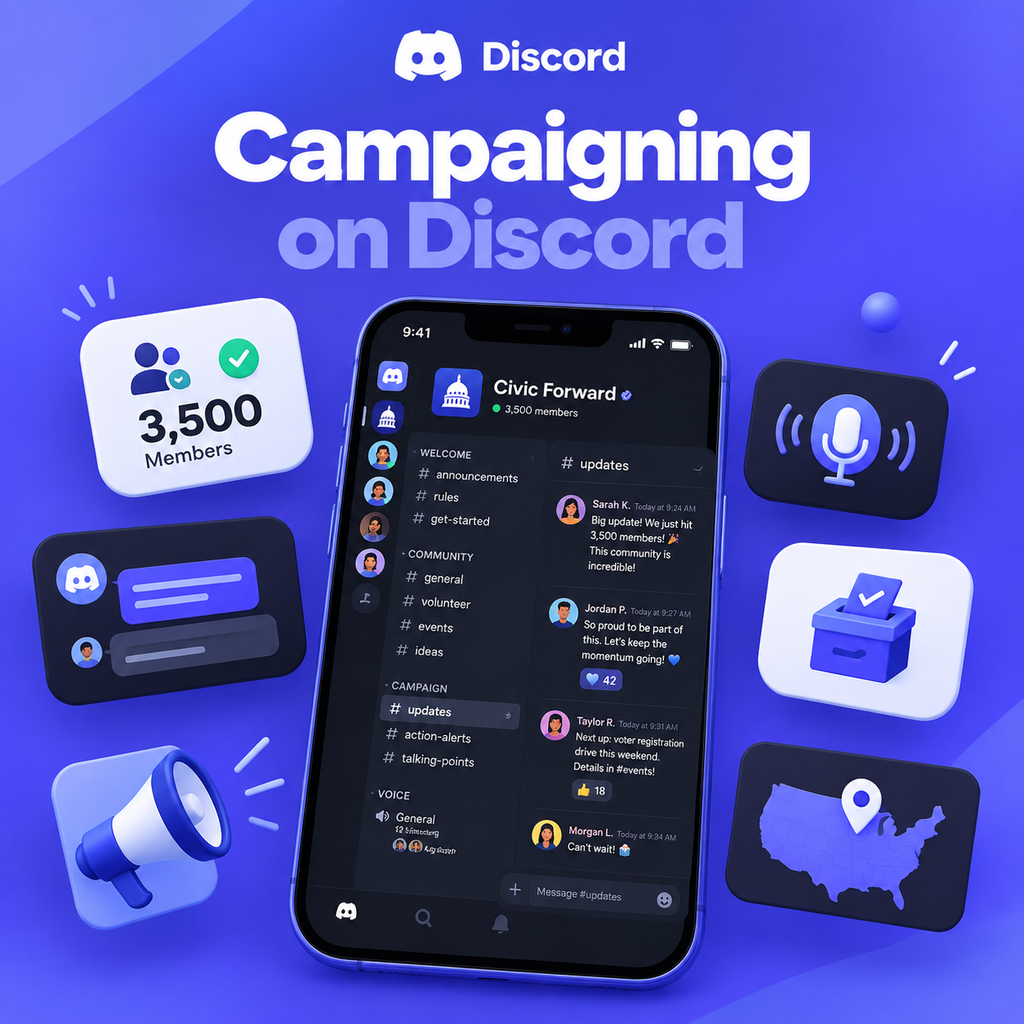
In the race for Illinois' 9th Congressional District, Kat Abughazaleh is rewriting the playbook for how a political campaign connects with its constituents. While traditional candidates spend their days dialing for dollars and courting party insiders, Abughazaleh has built a thriving digital community on Discord—a platform typically associated with gamers and niche online groups. With over 3,500 members, the "Kat for Illinois" Discord server has become the campaign's primary organizing hub, offering supporters unprecedented access to the candidate and a direct line to shape campaign messaging. It's a bold experiment in participatory politics that signals a broader shift in how younger candidates are approaching the digital landscape.
Unlike the controlled, top-down communication of most congressional campaigns, Abughazaleh's Discord server functions as a living, breathing community. Supporters don't just receive talking points; they engage in real-time discussions that influence campaign priorities, volunteer coordination, and even policy positions. This model reflects a growing desire among voters for authenticity and connection—a stark contrast to the polished, distant personas often cultivated by establishment politicians.
Why Discord Is the New Town Square
Discord might seem like an unlikely home for a political campaign, but its architecture is uniquely suited to community building. Unlike Facebook or Twitter, where algorithms dictate visibility and heated arguments often drown out nuance, Discord offers organized channels, voice chats, and a sense of shared space. Campaigns can create separate rooms for volunteer coordination, policy debates, and casual conversation, fostering both productivity and camaraderie.
For Abughazaleh, the platform's appeal lies in its intimacy. "It's not just about broadcasting a message," she explains. "It's about building a community that feels ownership over the campaign." That ownership translates into tangible benefits: members propose event ideas, flag local issues, and even draft social media content. The result is a campaign that feels less like a machine and more like a movement—one that supporters can log into from their living rooms.
The strategy also taps into a younger, digitally native demographic that traditional campaigns often struggle to reach. With over 3,500 members, the server has become a self-sustaining ecosystem where newcomers are welcomed, questions are answered, and enthusiasm is contagious.
From Online Chatter to Offline Action
Digital organizing is only as powerful as its real-world impact, and Abughazaleh's campaign is careful to bridge the gap. Discord members are encouraged to attend local events, from community concerts to mutual aid drives, where the online community transforms into a boots-on-the-ground network.
Volunteers use the server to sign up for canvassing shifts, share ride carpools, and coordinate phone banks. During a recent weekend of action, Discord members organized a neighborhood cleanup and voter registration drive that reached over 500 households—all planned through a dedicated channel. This integration of online and offline efforts creates a feedback loop: digital conversations fuel local action, and local experiences generate content that energizes the server.
Building Trust Through Transparency
One of the most striking features of the Kat for Illinois Discord is the direct access to the candidate herself. Abughazaleh regularly drops into voice chats to answer questions, discuss policy, and even brainstorm campaign slogans. This level of transparency is rare in congressional races, where candidates are often shielded by layers of staff.
Supporters say it makes them feel heard. "I've never had a candidate ask me what I think about an issue in real time," says one volunteer. "It's empowering." That empowerment fosters loyalty and word-of-mouth promotion, as members invite friends and family to join the server. In a political era marked by cynicism, such authenticity can be a powerful differentiator.
Redefining Volunteer Coordination
Traditional campaigns rely on email blasts and phone calls to mobilize volunteers, methods that often feel impersonal and one-directional. Abughazaleh's Discord flips that model, turning volunteer coordination into a collaborative, always-on conversation.
Dedicated channels for field operations, communications, and event planning keep everyone aligned. A bot tracks volunteer hours and sends reminders, while members celebrate milestones with emojis and shout-outs. This gamification of grassroots organizing keeps energy high and burnout low.
Moreover, the server serves as a training ground. New volunteers can shadow experienced ones, ask questions without judgment, and gradually take on leadership roles. The result is a resilient, self-replicating network that can scale up or down as needed—a critical advantage in the unpredictable sprint of a campaign.
The Challenges of Moderation and Scalability
Running a 3,500-member Discord server is not without its hurdles. Moderating conversations to keep them civil and on-topic requires dedicated moderators and clear community guidelines. The campaign has instituted a code of conduct and a team of volunteer moderators who enforce it, but occasional flare-ups are inevitable.
Scalability is another concern. As the server grows, maintaining a sense of intimacy becomes harder. Abughazaleh's team is experimenting with sub-channels based on geography and interest to preserve small-group dynamics. They're also mindful of security—protecting member data and preventing infiltration by trolls or opponents.
Despite these challenges, the campaign views the experiment as a success. The lessons learned are already informing how other down-ballot candidates approach digital organizing, making Abughazaleh a case study in 21st-century campaigning.
The Future of Participatory Campaigns
Abughazaleh's Discord experiment offers a glimpse into a future where campaigns are less about broadcast and more about collaboration. By giving supporters a genuine stake in the process, she's cultivated a base that is not only larger but deeper—people who feel personally invested in the outcome.
This model could reshape how candidates fundraise, communicate, and legislate. Imagine a representative who continues to use Discord to poll constituents before key votes, or who hosts town halls in voice channels. The potential for ongoing civic engagement beyond Election Day is immense.
As the 2026 midterms approach, all eyes will be on Illinois' 9th District—not just for the result, but for the blueprint it provides. In a time when faith in institutions is fragile, Kat Abughazaleh's Discord server proves that technology, when used thoughtfully, can bring politics back to the people. It's not just a campaign tool; it's a reimagining of what democracy can look like in the digital age.