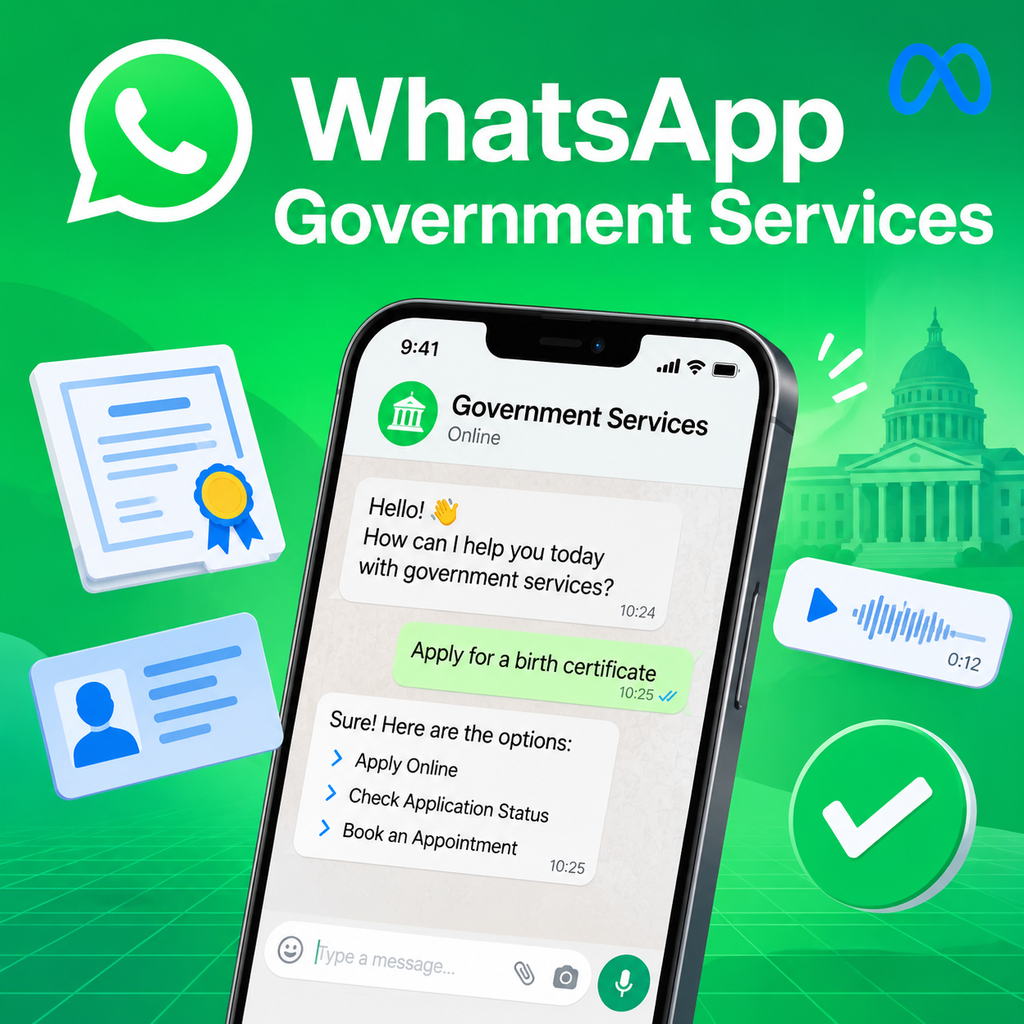
Gujarat and Meta sign MoU in Gandhinagar for WhatsApp-based citizen service delivery
Gujarat’s WhatsApp Governance Leap: 20 Services at Your Fingertips
Imagine applying for a caste certificate or tracking a grievance while chatting with a friend on WhatsApp. That’s the new reality for Gujarat residents. On May 25, 2026, the Gujarat government signed a Memorandum of Understanding (MoU) with Meta Platforms Inc. in Gandhinagar to deliver nearly 20 citizen-centric services through a dedicated WhatsApp chatbot. The initiative, part of the 'Sugam Digital Gujarat' program, aims to simplify access to government services, making them as easy as sending a message. With Chief Minister Bhupendra Patel present, the MoU was inked by Harit Shukla, Secretary, Training and Administrative Reforms Division, and Meta representatives Aman Jain and A. Srinivas.
This move marks a significant shift in how citizens interact with the government, moving from queues and paperwork to instant digital access. The services, available in Gujarati and English, will cover grievance redressal, income, caste, and EWS certificates, ration card updates, revenue records, and official affidavits. The chatbot will also have voice capabilities, ensuring accessibility for all, including those in rural areas. This isn’t just about convenience—it’s about empowering citizens with real-time status tracking and transparent processes, potentially setting a benchmark for other states.
Inside the Sugam Digital Gujarat Initiative
The 'Sugam Digital Gujarat' initiative was born from recommendations by the Gujarat Administrative Reforms Commission (GARC) to embrace digital governance. The goal is clear: make government services accessible to every citizen, especially at the last mile. By leveraging WhatsApp—a platform already used by millions for daily communication—the state hopes to bridge the digital divide. The chatbot will be accessible via a single WhatsApp number, eliminating the need to navigate multiple web portals or visit government offices. Initially, 20 services from five key departments will be integrated, with more to follow in phases. The government envisions a future where citizens can complete the entire process—from application to certificate download—without stepping out of their homes.
But it’s not just about technology; it’s about inclusivity. The chatbot’s voice feature ensures that even those with limited literacy can use it. Currently, services are delivered through Jan Seva Kendras in urban areas and Village Computer Entrepreneur (VCE) systems in rural areas. The WhatsApp integration extends this reach directly to mobile phones, saving time, cost, and paperwork. The government also emphasizes that this will strengthen transparency and accountability, as applications can be tracked in real-time.
Meta’s Broader Vision: AI and Beyond
This partnership is more than just a service delivery channel; it’s a strategic collaboration spanning two years. Alongside the WhatsApp chatbot, Meta and Gujarat will explore opportunities in Artificial Intelligence (AI), next-generation wearables, and digital infrastructure. The idea is to drive inclusive development and citizen-centric governance. For instance, Meta will provide AI and digital skills training to creators and small and medium businesses (SMBs) in Gujarat, equipping them with tools to grow in the digital economy. This aligns with Meta’s commitment to responsible AI innovation and Gujarat’s progressive vision for e-governance.
The MoU also includes a Letter of Intent (LOI) to collaborate on the state’s AI agenda. This could involve using AI for better policy-making, healthcare, education, and more. By combining Meta’s technological prowess with Gujarat’s administrative reach, the partnership aims to unlock new social and economic opportunities. Officials believe this will transform the lives of citizens, making governance more responsive and efficient. The focus on AI skilling also ensures that the benefits of technology trickle down to grassroots entrepreneurs, fostering a robust digital ecosystem.
What It Means for Citizens: Speed, Simplicity, Transparency
For the average citizen, the biggest win is convenience. No more taking time off work to stand in line at a government office. With WhatsApp, services are available 24/7, right from your phone. Need an income certificate? Just send a message, fill in the details, and track the status. The chatbot will guide you through the process in your preferred language. The government plans to gradually integrate more services, making it a one-stop solution for all administrative needs.
Transparency is another key benefit. Real-time tracking means you know exactly where your application stands. This reduces the scope for delays and corruption. It also empowers citizens to hold the system accountable. For rural residents, who often face the brunt of bureaucratic delays, this is a game-changer. The voice-enabled chatbot ensures that even those uncomfortable with typing can use the service. By reducing paperwork and travel, the initiative also cuts costs for citizens, making government services more affordable and accessible to all.
The Road Ahead: Integration and Expansion
While the MoU is signed, the launch will take time. Customization and integration of different platforms are required, and officials are cautious about announcing a timeline. The first phase will roll out the 20 services, with a focus on grievance redressal and certificates. Subsequent phases will see more departments and services added. The government also plans to enable end-to-end service delivery, where applications and certificates are processed seamlessly on WhatsApp. This requires robust backend integration and data security measures, which are being worked out.
The success of this initiative depends on adoption. The government will need to create awareness, especially in rural areas, and ensure the chatbot is user-friendly. Training for staff and continuous feedback will be crucial. If successful, Gujarat could serve as a model for other states looking to leverage messaging platforms for governance. The partnership with Meta also opens doors for future innovations, such as using AI to predict service demand or personalize citizen interactions. The possibilities are vast, and the state is clearly betting big on digital governance.
Redefining Citizen-Government Interaction
This MoU is a testament to how technology can bridge the gap between the government and the governed. By meeting citizens where they already are—on WhatsApp—Gujarat is making governance more human and less intimidating. The collaboration with Meta goes beyond service delivery; it’s about building a smarter, more inclusive state. As the initiative unfolds, it will be worth watching how citizens respond and how the government adapts. One thing is certain: the days of navigating multiple portals and long queues are numbered. The future of governance is conversational, and Gujarat is leading the way.