言語

How Brands Are Making Influencer Marketing Feel Real Again (2026)

How Brands Are Making Influencer Marketing Feel Real Again (2026)

The Collapse of Fake Influence

By April 2026, the influencer economy didn't just decline. It collapsed. Audiences became unable to distinguish real from AI-generated content: AI bodies indistinguishable from real humans (99.2% accuracy on detection tests), AI voices perfect enough to fool voice biometrics, and AI lip-sync matching natural human movement. The result? Audiences gave up trying to authenticate content. If you can't tell what's real, you stop trusting anything. For Gen Z, the shift was especially stark: 71% reported not knowing if influencers were real anymore, and a staggering 62% admitted they didn't care. The death knell? 84% now trust their friends' recommendations over any creator. The era of fake influence is over.

The New Trust Signals

In 2026, brands have abandoned vanity metrics like follower counts in favor of real trust indicators. The Verification Authenticity Index (VAI) scores creators based on account longevity, identity verification, content consistency (detecting AI synthesis), real-world meetups, and third-party credentials. A 100k-follower account with a VAI of 78 now outperforms 500k followers with a low score. Community reciprocity has become equally critical: audiences reward creators who actually respond to comments, show mistakes and failures, admit when paid, and maintain a consistent point of view. Even anonymity has become a trust signal in certain niches, as communities on Reddit and Discord cross-check facts and rank creators on honesty.

Decentralized Verification

Instead of platforms certifying creators, communities now do the vetting. Reddit communities rate creators on honesty, private Discord servers cross-check facts, blockchain verification tracks past predictions for accuracy scoring, and third-party audits assess authenticity claims. This shift puts power back in the hands of audiences, forcing brands to earn trust through genuine partnerships rather than paid placements.

Micro-Influencers and the Authenticity Premium

Micro-influencers now deliver 3.2x higher engagement at 60% lower cost than mega-influencers. Nano creators average 4.84% engagement versus 1.21% for the biggest accounts. But the real secret lies in sustained partnerships: creators who have posted about a brand three or more times generate 30–50% higher engagement than one-off deals. Audiences can instantly spot the difference between a first-time try-on and a creator who has genuinely used the product for months. Research shows that creators who mention a product category organically before any partnership are worth roughly 3x more than those who don't. The authenticity premium isn't a vibe—it's measurable, and it directly impacts ROI.

What Authentic Content Looks Like

Raw, lightly edited, day-in-the-life video content converts best. Overproduced influencer content triggers the same skepticism as a TV commercial. UGC-style beats studio-produced content on every platform. Transparency also boosts performance: direct verbal disclosure and clear #ad labels don't hurt engagement—inauthenticity does. The 2026 UNESCO global study found zero evidence that sponsorship disclosure reduces engagement. Audiences punish fakeness, not honesty.

How Brands Are Redesigning Briefs

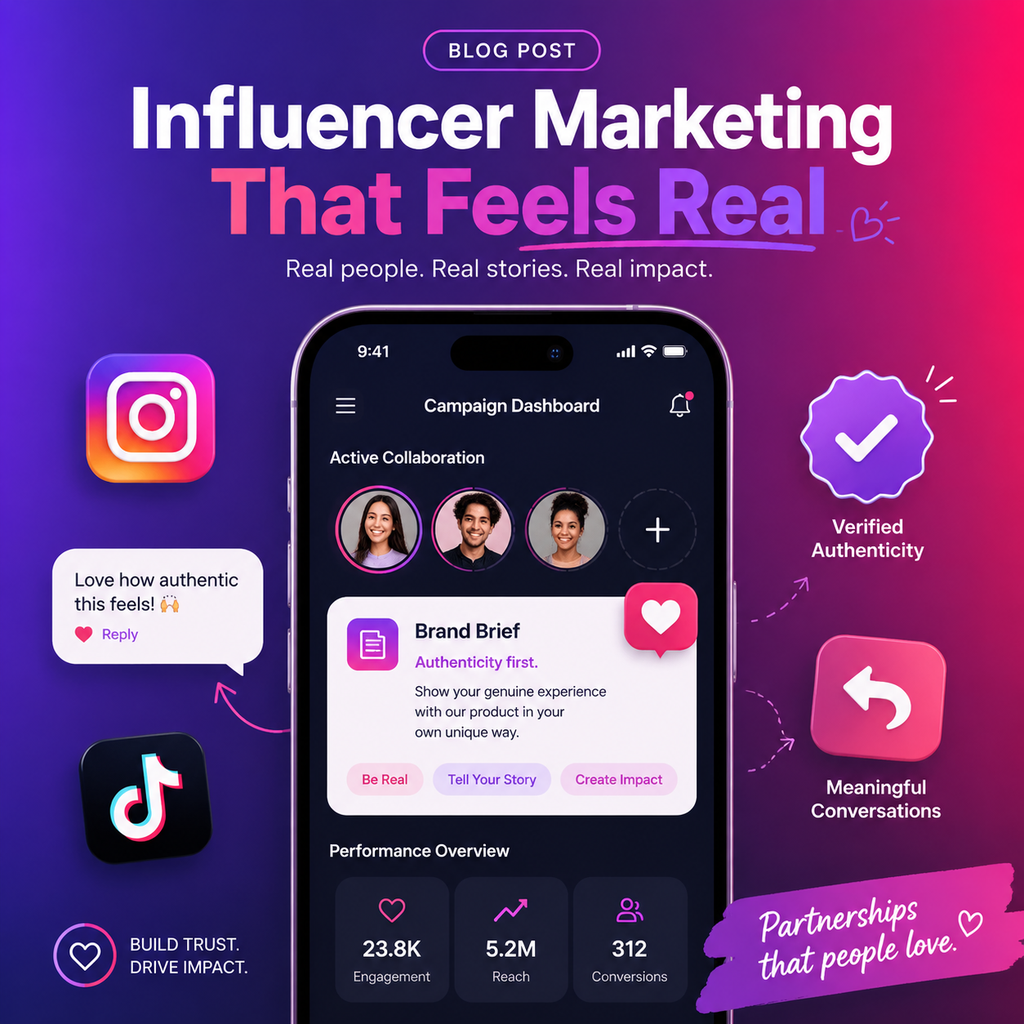
The brief has become the single most important tool for protecting authenticity. Smart brands now specify only product context, one key message, a clear CTA, non-negotiables like FTC disclosure, and usage rights. They leave everything else open: the hook, exact wording, format, setting, and tone. Over-briefing is the most common way brands destroy authentic content. Giving creators freedom on hooks, format, and wording lets them speak in their natural voice—which is precisely what audiences trust. As one benchmark report put it: "Talk about how this saves time on meal prep" works. "Say: This product has revolutionised my weekly meal preparation routine" doesn't.

Measuring What Matters

Brands that segment their influencer content into two buckets—sustained partnerships vs. one-off deals—consistently uncover a massive gap in engagement, conversion, and 30-day customer LTV. The same analysis by disclosure method reveals that direct, upfront disclosure outperforms hidden or platform-only labels. Tracking audience quality alongside engagement is equally critical: a post with 5% engagement from real, in-market buyers is worth more than 8% engagement from a mismatched audience. UTM parameters, unique discount codes, and post-purchase surveys now tell brands exactly which creators' audiences actually spend money. In 2026, authenticity isn't just a feel-good strategy—it's your highest-leverage performance lever.

Partnering with the Right Creators

Authenticity starts before a brief is ever written. Rigorous vetting now includes analyzing the last 20–30 posts for topic consistency, reading real comments, and checking the ratio of comments to likes (not just total engagement). Brands look for creators who already talk about their product category, have genuine audience relationships, and only promote products that fit their lifestyle. The best partnerships feel less like transactions and more like genuine collaborations—where the creator's passion and expertise shine through. In a world where authenticity is the new currency, the brands that win are those that ask: What do we actually have to say? And they find creators who can say it better than they ever could.

戻る