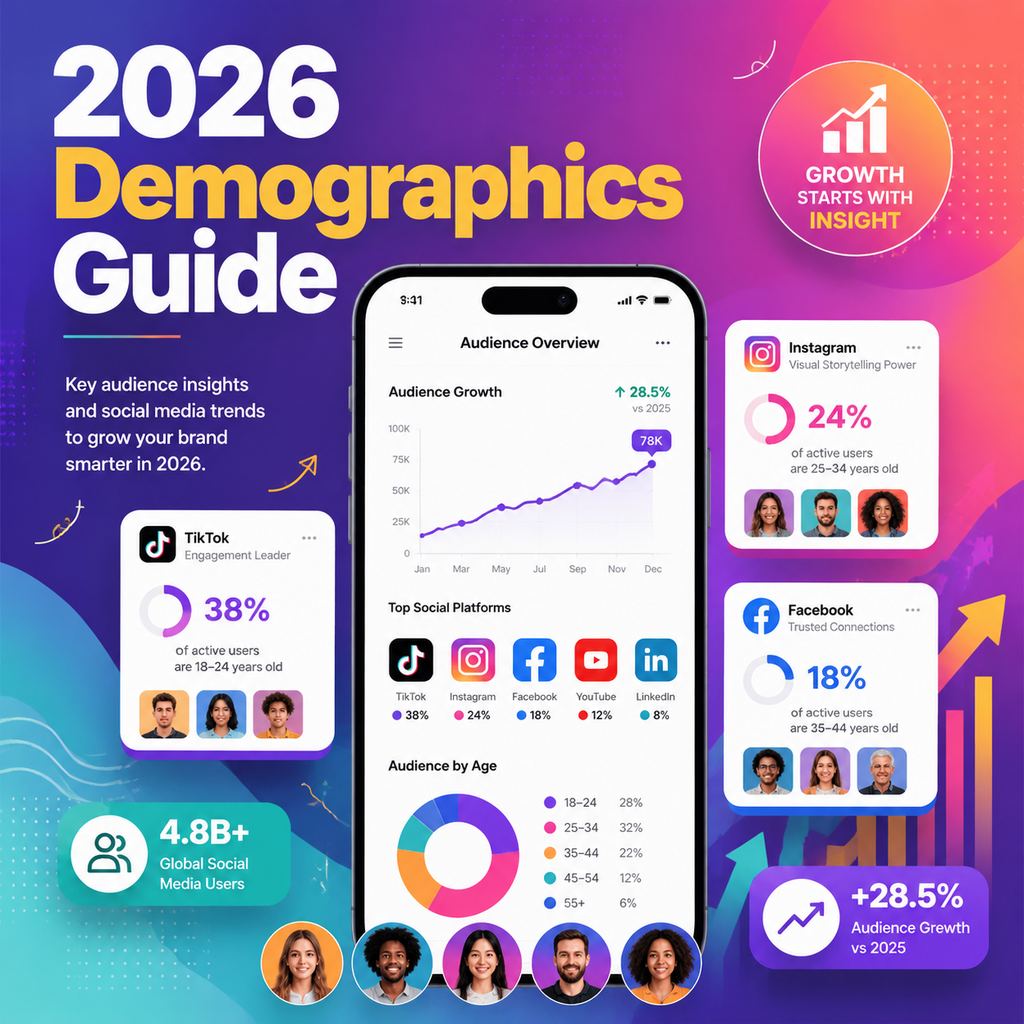
Datos demográficos de redes sociales para tu estrategia 2026
El Nuevo Panorama de las Redes Sociales: Una Instantánea
Las redes sociales han alcanzado oficialmente el estatus de supermayoría en 2026. Con aproximadamente 5.66 mil millones de usuarios activos en todo el mundo—eso es el 93.8% de todos los usuarios de internet—las plataformas sociales ya no son solo un pasatiempo; son un comportamiento digital universal. El usuario promedio ahora navega por 6.75 redes sociales diferentes cada mes, dedicando unas 18 horas y 36 minutos por semana en total. Este hábito multiplataforma significa que depender de un solo canal es una estrategia destinada al fracaso. Para los especialistas en marketing, entender estos datos demográficos no se trata solo de saber quién está en línea; se trata de comprender dónde vive tu audiencia, cómo se comporta y qué espera de las marcas en este espacio fragmentado y hiperconectado.
Desglose Generacional: Quién Está Dónde en 2026
Las diferentes generaciones han creado sus propios territorios sociales, y conocerlos es clave para la segmentación. Así se desglosa el uso global por generación:
- Generación Z (10-25): YouTube (91%), Instagram (86%), TikTok (79%), Facebook (77%)
- Millennials (26-41): YouTube (90%), Facebook (89%), Instagram (81%), TikTok (69%)
- Generación X (42-57): Facebook (88%), YouTube (83%), Instagram (60%), TikTok (46%)
- Baby Boomers (58-76): Facebook (88%), YouTube (69%), Instagram (39%), TikTok (20%)
El grupo de edad de 16 a 24 años sigue siendo el más activo, interactuando con las redes sociales aproximadamente 4.6 días por semana y dedicando alrededor de 3.5 horas cada día. Les sigue de cerca el grupo demográfico de 25 a 34 años, que muestra una consistencia casi igual y es una audiencia comercialmente crucial. Aunque los grupos demográficos de mayor edad no sean tan llamativos, siguen siendo muy activos en plataformas como Facebook y YouTube.
Datos Demográficos Específicos por Plataforma: El Análisis Profundo
Cada plataforma tiene su propio perfil demográfico único, y entender estos matices puede hacer o deshacer tu estrategia. Desglosemos los actores principales.
Facebook: El Caballo de Batalla de Amplio Alcance
Con 3.07 mil millones de usuarios activos mensuales, Facebook sigue siendo la red social más grande del mundo, pero su crecimiento ahora está impulsado por usuarios de 25 a 34 años. Este grupo de edad representa el 31.1% de su base de usuarios, con una división de género de 56% hombres a 44% mujeres. El usuario promedio pasa 67 minutos al día en Facebook, lo que lo convierte en un lugar privilegiado para contenido detallado, construcción de comunidad y servicio al cliente. También es un motor para el descubrimiento de productos—una razón clave por la que sigue siendo esencial para las estrategias de comercio electrónico.
Instagram: Centro de Descubrimiento Visual
Instagram cuenta con 3 mil millones de usuarios activos mensuales y se inclina hacia los más jóvenes, con el grupo de 18 a 24 años representando el 31.7% de su audiencia, seguido de cerca por el de 25 a 34 con un 30.6%. La plataforma está casi equilibrada en cuanto a género. Los usuarios pasan un promedio de 73 minutos al día aquí, interactuando mucho con Reels y funciones de compra. Si tu marca depende de la narración visual, Instagram es tu lienzo.
YouTube: Dominio del Video en Todas las Edades
YouTube tiene 2.58 mil millones de usuarios activos mensuales, con el segmento más grande (29.1%) de 25 a 34 años. Es el lugar ideal tanto para video de formato largo como corto, con usuarios que pasan un promedio de 73 minutos al día. En EE. UU., YouTube supera a Facebook como la plataforma más popular. Esto lo hace esencial para contenido de video orientado a SEO y para llegar a una audiencia amplia y comprometida.
TikTok: La Sensación de Formato Corto
TikTok ha explotado a 2 mil millones de usuarios activos mensuales, con su grupo de edad más grande siendo el de 25 a 34 años con un 35%. Sin embargo, la Generación Z (18-24) todavía representa un sustancial 38%, pasando unos enormes 62 minutos al día en la aplicación. Sorprendentemente, TikTok ahora tiene una base de usuarios femeninos ligeramente más alta (55.7%). Con su algoritmo único y altas tasas de participación, es perfecto para campañas virales y llegar a audiencias más jóvenes.
Plataformas Emergentes y Oportunidades de Nicho
Aunque los grandes actores dominan, no pases por alto el potencial de otras redes. LinkedIn ha superado los mil millones de miembros, con el 60% de su audiencia de 25 a 34 años—un centro crítico B2B. Snapchat, con 820 millones de MAU, sigue siendo popular entre el grupo de 18 a 24 años. Reddit (500 millones de MAU) ofrece una participación comunitaria profunda, mientras que Threads (450 millones de MAU) está creciendo entre los de 25 a 34. X (antes Twitter) se sitúa en 660 millones de MAU y todavía tiene influencia para noticias en tiempo real. Cada plataforma ofrece una forma única de conectarse con segmentos de audiencia específicos.
Búsqueda Social: El Nuevo Comportamiento del Consumidor
Uno de los cambios más revolucionarios es el auge de la búsqueda social. En 2026, más del 60% del descubrimiento de productos ocurre en plataformas sociales como TikTok, Instagram y YouTube, superando a los motores de búsqueda tradicionales. Entre la Generación Z, el 41% recurre a las redes sociales primero al buscar información, en comparación con solo el 32% para Google. Aún más sorprendente, el 52% de los usuarios de redes sociales prefieren la búsqueda social sobre los chatbots de IA, y confían más en la información de marca encontrada en las redes que en cualquier otra fuente. Esto significa que tu contenido necesita estar optimizado para la búsqueda social—usando palabras clave relevantes en subtítulos, hashtags y descripciones de video para aparecer en estas nuevas rutas de descubrimiento.
Uniendo Todo: Elaborando tu Estrategia para 2026
Entonces, ¿qué significa esto para tu estrategia de redes sociales en 2026? Comienza mapeando tus perfiles de cliente ideales con estos datos demográficos de plataforma. Pregunta no "¿deberíamos estar en TikTok?" sino "¿dónde va nuestro gerente de operaciones de 28 años al comparar herramientas?". Luego, adapta el formato y tono de tu contenido a la cultura de cada plataforma. No te extiendas demasiado—elige 3-4 plataformas que se alineen con tu audiencia y concéntrate en crear contenido específico de alta calidad. La clave es combinar la participación orgánica con anuncios pagados dirigidos, optimizar para el comercio nativo (ya que el 78% de las compras de comercio social ocurren dentro de la aplicación), y mantenerte ágil a medida que evolucionan las tendencias. Al alinear tu estrategia con los datos demográficos, estarás bien equipado para conectarte con tu audiencia donde son más activos, construyendo relaciones significativas que impulsen resultados comerciales reales.