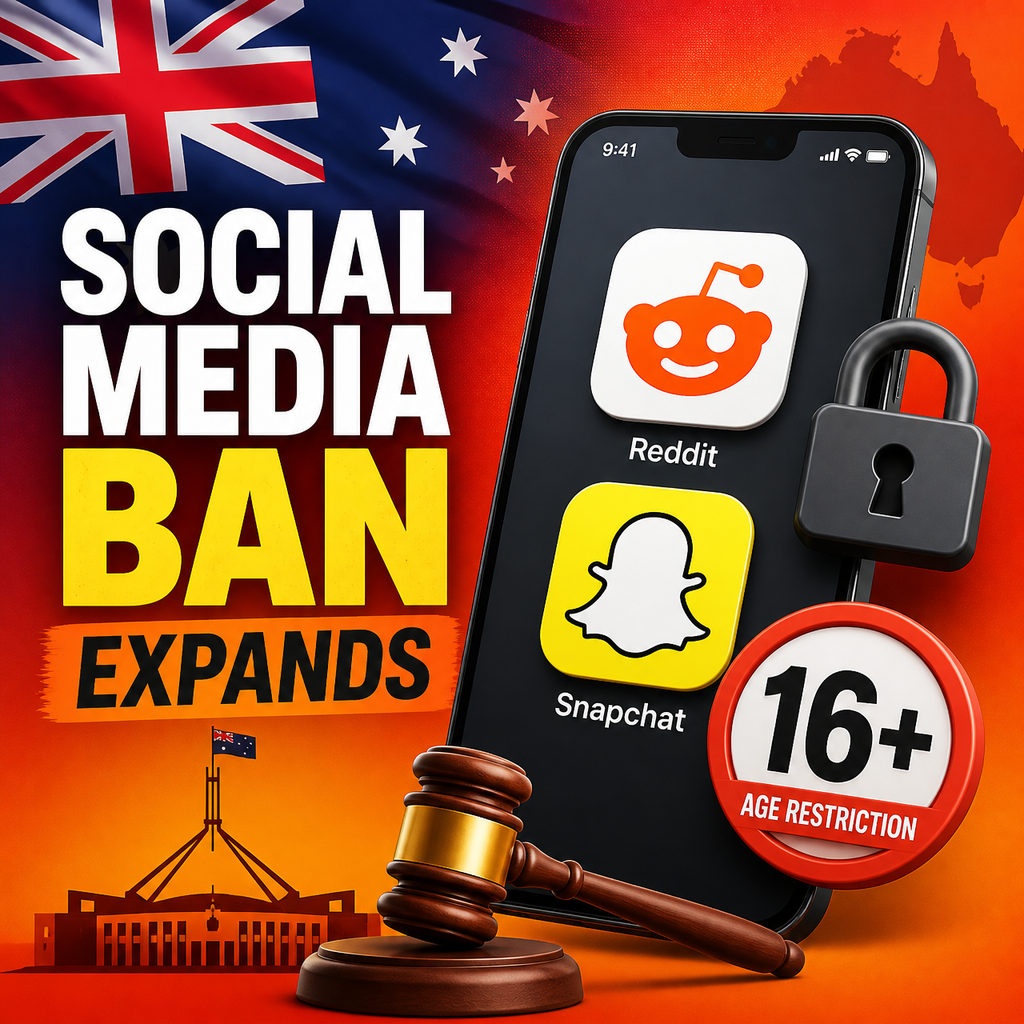
Reddit und Snapchat von Social-Media-Verbot erfasst
Australiens umfassendes Social-Media-Verbot
Australiens bahnbrechendes Social-Media-Verbot für unter 16-Jährige hat unter anderem Reddit und Snapchat in ein regulatorisches Netz gezogen, das nun zehn große Plattformen umfasst. Die Maßnahme, die am 10. Dezember 2025 in Kraft trat, macht Australien zum ersten Land, das eine so weitreichende Beschränkung durchsetzt, und sie sendet Wellen durch die Tech-Welt.
Eine wachsende Liste verbotener Plattformen
Die ursprüngliche Liste der von dem Verbot betroffenen Plattformen hat sich erheblich erweitert. Ursprünglich zielte die Gesetzgebung auf Facebook, Instagram, TikTok, YouTube und X ab. Nach umfangreichen Konsultationen fügte die australische Regierung jedoch Reddit, Snapchat, Threads und den Livestreaming-Dienst Kick hinzu. Damit umfasst die Liste insgesamt zehn Dienste, die "angemessene Schritte" unternehmen müssen, um zu verhindern, dass Nutzer unter 16 Jahren Konten erstellen, und bestehende Konten zu deaktivieren.
Kommunikationsministerin Anika Wells betonte, dass die Regierung mit diesen Plattformen Gespräche geführt habe, um sicherzustellen, dass sie verstehen, dass es keine Rechtfertigung für die Nichteinhaltung gibt. Die Auswahlkriterien konzentrieren sich auf Plattformen, deren primäres oder wesentliches Ziel die Erleichterung von Online-Sozialinteraktion ist. Deshalb sind Messaging-Apps wie Discord und WhatsApp, Gaming-Seiten wie Roblox und Bildungstools wie Google Classroom ausgenommen.
Warum Reddit und Snapchat?
Reddit mit seiner Vielzahl an Foren und Diskussionsthreads und Snapchat, bekannt für seine ephemere Nachrichtenübermittlung, fallen beide unter die Definition von "Social Media" aufgrund ihrer interaktiven und gemeinschaftsorientierten Natur. Ihre Aufnahme unterstreicht die breite Auslegung der Regierung, was eine soziale Plattform ausmacht, mit dem Ziel, Minderjährige vor potenziellen Online-Schäden zu schützen.
Verdopplung der Strafen
Im Juni 2026 kündigte die australische Regierung an, die Höchststrafen für Technologieunternehmen, die das Verbot systematisch missachten, zu verdoppeln. Die Geldstrafe steigt von 49,5 Millionen A$ auf satte 99 Millionen A$ (etwa 68 Millionen US-Dollar). Diese Eskalation erfolgt, da Beweise darauf hindeuten, dass das Verbot nur begrenzte Auswirkungen auf die Nutzung durch Jugendliche hatte, was die Regulierungsbehörden dazu veranlasst, den Druck auf Unternehmen zu erhöhen, die Vorschriften einzuhalten.
Darüber hinaus wurden die Befugnisse des eSafety-Kommissars gestärkt, sodass die Regulierungsbehörde Social-Media-Unternehmen zwingen kann, Nachweise über die Maßnahmen zu erbringen, die sie zur Durchsetzung der Altersbeschränkung implementiert haben. Dies umfasst die Anforderung von Daten über Kontodeaktivierungen und die Schritte, die unternommen wurden, um minderjährige Anmeldungen zu verhindern.
Durchsetzung und Altersverifikationsmethoden
Um das Gesetz einzuhalten, erkunden Plattformen verschiedene Altersverifikationstechniken. Diese reichen von der Verwendung offizieller Ausweisdokumente und der Zustimmung der Eltern bis hin zum Einsatz von Gesichtserkennungstechnologie und der Analyse von Online-Verhaltensmustern. Einige Dienste erwägen auch, Bankdaten zu verknüpfen, um das Alter zu verifizieren, obwohl dies Datenschutzbedenken aufwirft.
Die australische Regierung hat klargestellt, dass sie eine robuste Einhaltung erwartet, und die Androhung hoher Geldstrafen ist ein starker Anreiz. Technologieunternehmen haben jedoch Bedenken hinsichtlich der Praktikabilität dieser Maßnahmen geäußert, insbesondere in Bezug auf Datenschutz und die Möglichkeit von Fehlalarmen.
Globale Auswirkungen
Australiens Verbot wird von Regierungen weltweit genau beobachtet. Als erstes Land, das eine so weitreichende Beschränkung implementiert, dient es als Testfall für andere Nationen, die ähnliche Gesetze erwägen. Die Ergebnisse – sowohl in Bezug auf die Reduzierung der Social-Media-Nutzung durch Jugendliche als auch auf die operativen Herausforderungen, mit denen Plattformen konfrontiert sind – werden wahrscheinlich politische Entscheidungen weltweit beeinflussen.
Während einige argumentieren, dass das Verbot ein notwendiger Schritt ist, um die psychische Gesundheit und Sicherheit junger Menschen zu schützen, sorgen sich Kritiker um die Auswirkungen auf die Meinungsfreiheit und die digitale Inklusion. Ob das Verbot langfristig wirksam ist, bleibt abzuwarten, aber seine Auswirkungen auf regulatorische Ansätze sind unbestreitbar.
Der Weg nach vorn
Während Australien seinen Ansatz weiter verfeinert, verdeutlicht die Aufnahme von Plattformen wie Reddit und Snapchat die Komplexität der Definition und Regulierung der digitalen Landschaft. Die Verdopplung der Strafen signalisiert ein festes Engagement für die Durchsetzung, aber die eigentliche Herausforderung liegt in der praktischen Umsetzung der Altersverifikation und dem Balanceakt zwischen dem Schutz Minderjähriger und der Wahrung von Online-Freiheiten.
Vorerst schaut die Welt zu, wie Australien dieses Pioniergebiet navigiert und einen Präzedenzfall schafft, der die Social-Media-Nutzung für die nächste Generation neu gestalten könnte. Die innovativen, wenn auch umstrittenen Strategien, die hier eingesetzt werden, könnten durchaus zur Blaupause für die globale digitale Governance werden und sowohl Plattformen als auch Regulierungsbehörden zwingen, sich gemeinsam weiterzuentwickeln.