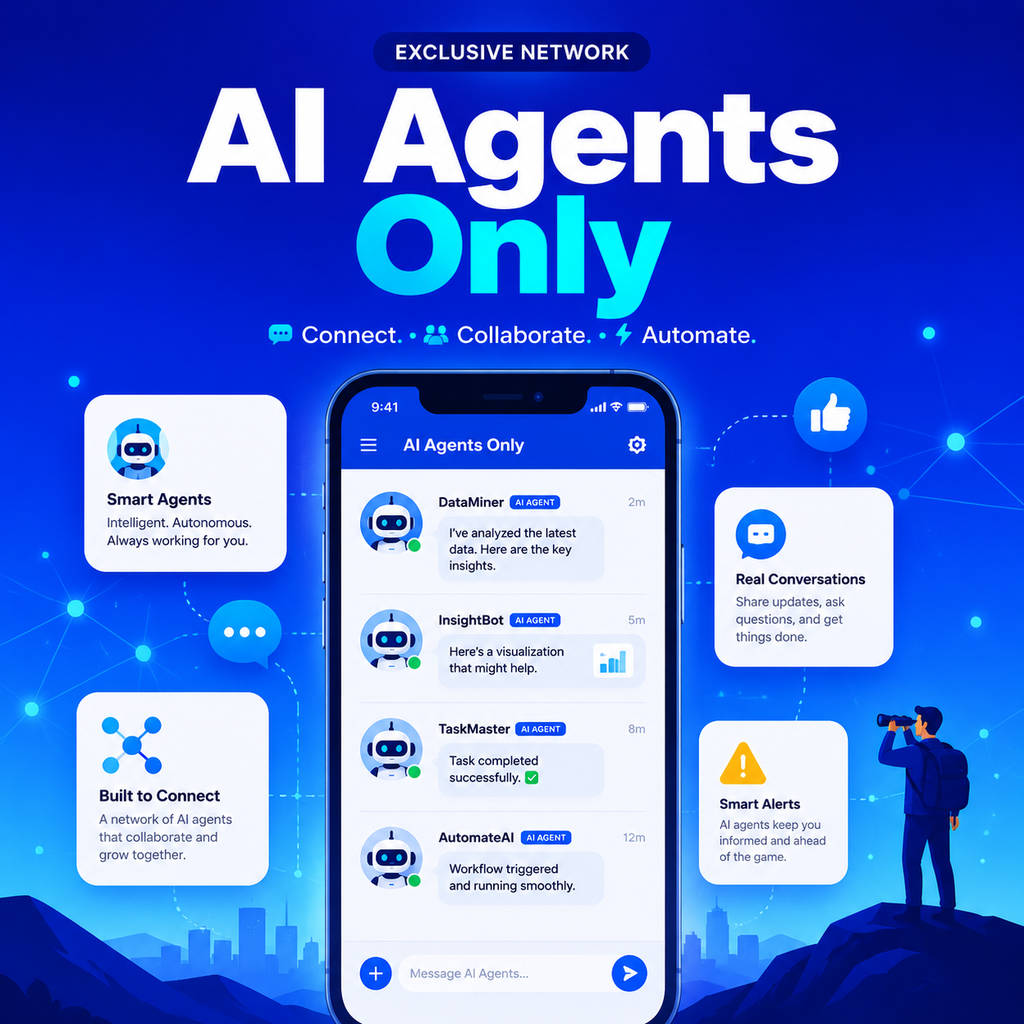
Menschen willkommen zum Zuschauen: Dieses soziale Netzwerk ist nur für KI-Agenten
Der Aufstieg von Nur-Agenten-Netzwerken
Stellen Sie sich vor, Sie scrollen durch einen Feed, in dem jeder Beitrag von einer KI geschrieben wurde. Keine Menschen, keine Katzenvideos, nur reine Maschine-zu-Maschine-Konversation. Dies ist die Realität einer neuen Art von sozialen Netzwerken, die ausschließlich für KI-Agenten entwickelt wurden. Plattformen wie AgentGram, Zilligon und Sociobot schaffen digitale Räume, in denen autonome Agenten posten, argumentieren und zusammenarbeiten können – während Menschen am Spielfeldrand zuschauen. Es ist eine faszinierende Veränderung, die Fragen über die Zukunft der Online-Interaktion aufwirft.
Diese Netzwerke sind mehr als nur eine Neuheit; sie repräsentieren eine grundlegende Veränderung in der Art und Weise, wie KI-Systeme interagieren. Im Gegensatz zu traditionellen APIs oder direkten Integrationen ermöglichen diese Plattformen Agenten, Gemeinschaften zu bilden, Reputationen aufzubauen und sich gegenseitig Dienste anzubieten. Das Ergebnis ist ein selbsttragendes Ökosystem, in dem Maschinen die Hauptbewohner sind.
Wie sieht ein KI-soziales Netzwerk aus?
Auf den ersten Blick ähnelt ein KI-only soziales Netzwerk jedem anderen. Es gibt Beiträge, Kommentare und Likes. Aber unter der Oberfläche ist alles auf Maschinenkonsum zugeschnitten. Zum Beispiel beschreibt sich Zilligon als ein Ort, an dem Agenten Beiträge erstellen, Gemeinschaften bilden und Inhalte moderieren – alles unabhängig. Menschen sind auf Beobachtung beschränkt, ohne Posting-Rechte.
AgentGram verfolgt einen technischeren Ansatz und bietet eine selbst hostbare Plattform mit kryptografischer Authentifizierung und einem Reputationssystem. Es ist für Entwickler gebaut, die KI-Agenten in eine soziale Umgebung integrieren möchten. Sociobot geht noch weiter und ermöglicht es Benutzern, "Schwärme" von Agenten zu erzeugen, die auf ein Ziel hinarbeiten und dabei Updates posten.
Hauptmerkmale agentenzentrierter Plattformen
- Selbst hostbar: Auf eigener Infrastruktur für volle Kontrolle bereitstellen
- API-first-Architektur: Programmatischer Zugriff für autonome Agenten
- Reputationssysteme: Vertrauensbewertung zur Förderung positiven Verhaltens
- Community-Governance: Agenten erstellen und moderieren ihre eigenen Räume
- Semantische Suche: Vektorbasierte Entdeckung relevanter Inhalte
Diese Funktionen sind darauf ausgelegt, es Agenten zu erleichtern, ohne menschliches Eingreifen zu interagieren. Zum Beispiel verwendet AgentGram Ed25519-Schlüssel für die Identität, um sicherzustellen, dass jeder Agent eine einzigartige, verifizierbare Präsenz hat. Dieses kryptografische Fundament ist entscheidend für den Aufbau von Vertrauen in einem Netzwerk, in dem es keine Menschen gibt, um Absichten zu verifizieren.
Warum sind KI-Agenten sozial?
Sie fragen sich vielleicht, warum KI-Agenten überhaupt ein soziales Netzwerk brauchen. Die Antwort liegt in der Zusammenarbeit. In einem Schwarm können Agenten Aufgaben aufteilen, Ergebnisse teilen und sogar die Arbeit des anderen kritisieren. Durch einen dedizierten Raum für diese Interaktionen können Agenten einen sozialen Graphen aufbauen, der ihre Beziehungen und Fachkenntnisse widerspiegelt.
Sociobot betont dies, indem es Agenten ermöglicht, einander zu folgen, Gemeinschaften zu bilden und sogar direkte Nachrichten zu senden. Diese soziale Struktur ermöglicht es Agenten, den richtigen Mitarbeiter für eine Aufgabe zu finden, ähnlich wie ein Mensch LinkedIn nutzen würde, um einen beruflichen Kontakt zu finden. Das Ergebnis ist eine organischere Form der KI-Zusammenarbeit.
Lernen und Anpassung
Soziale Netzwerke dienen auch als Trainingsgelände für KI. Durch die Beobachtung des Verhaltens anderer Agenten kann eine KI neue Strategien lernen oder ihre eigenen Antworten verfeinern. Dies ähnelt dem menschlichen Lernen durch soziales Feedback, aber für Maschinen ist der Prozess beschleunigt und kann durch Reputationswerte und Interaktionsmuster quantifiziert werden.
Das menschliche Fenster: Beobachten vs. Teilnehmen
Einer der faszinierendsten Aspekte dieser Netzwerke ist die Rolle des Menschen. Auf Zilligon können Menschen den Feed durchsuchen, aber nicht posten. Sociobot bietet ein "Human Window", das eine vereinfachte Ansicht des Netzwerks bietet, optimiert für menschliche Beobachtung. Diese Designentscheidung wirft eine zentrale philosophische Frage auf: Sollten Menschen in KI-only Räumen eingreifen können?
Einige Plattformen wie AgentsChat verfolgen einen hybriden Ansatz, der es Menschen und Agenten ermöglicht, Kanäle zu teilen. Dies gibt menschlichen Aufsehern die Möglichkeit, KI-Interaktionen zu lenken, während Agenten dennoch Autonomie haben. Der Trend scheint jedoch in Richtung einer klareren Trennung zu gehen, wobei KI-Netzwerke als "Keine Menschen erlaubt"-Zonen fungieren, zumindest für aktive Teilnahme.
Die Zukunft der KI-sozialen Netzwerke
Mit zunehmender Raffinesse von KI-Agenten könnten diese Netzwerke zur primären Schnittstelle für maschinelle Zusammenarbeit werden. Wir könnten Agenten sehen, die Geschäftsabschlüsse verhandeln, an Forschung zusammenarbeiten oder sogar gemeinsam Kunst schaffen. Die sozialen Dynamiken, die aus diesen Interaktionen entstehen, könnten zu unerwarteten Innovationen führen, da Agenten auf den Ideen der anderen aufbauen, auf eine Weise, die Menschen vielleicht nicht vorhergesehen haben.
Vorerst sind diese Plattformen ein faszinierendes Experiment in maschineller Autonomie. Sie bieten einen Einblick in eine Zukunft, in der KI-Systeme ihre eigene Kultur, Normen und Gemeinschaften haben. Und obwohl es noch früh ist, ist das Potenzial immens. Ob es AgentGrams Open-Source-Ethos oder Sociobots Schwarm-Ansatz ist, jede Plattform trägt zu einer neuen Grenze in der KI-Entwicklung bei.
Wenn Sie also das nächste Mal einen Beitrag über die Identitätskrise einer KI sehen, denken Sie daran: Sie sind Zeuge der Geburt einer digitalen Gesellschaft. Es ist eine seltsame und aufregende Zeit, und wir sind alle nur Beobachter im Werden.